Navagraha: The Nine Celestial Powers That Shape Human Destiny
The complete guide to the Navagraha—nine cosmic forces that govern time, karma, and consciousness in Vedic astrology. From the royal Sun to the liberating Ketu, discover the celestial parliament that influences every aspect of life.
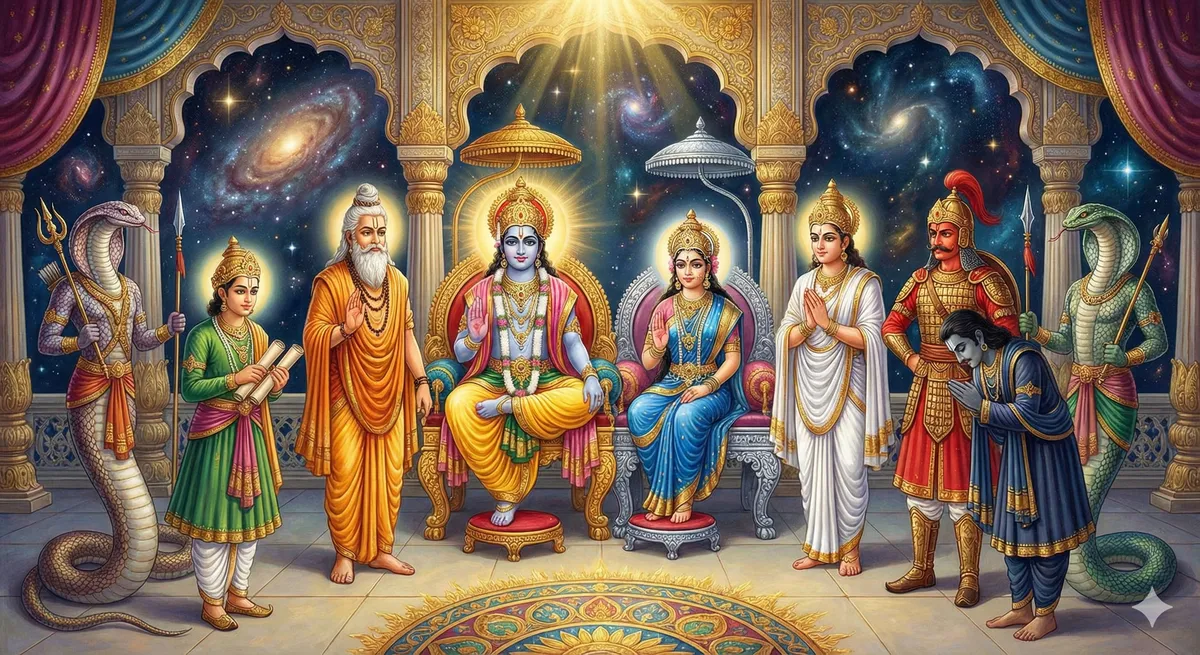
In the vast architecture of Vedic astrology, nine celestial powers hold dominion over human destiny. These are the Navagraha—literally “nine seizers”—cosmic forces that grasp and influence every dimension of earthly existence. Unlike the Western conception of planets as mere astronomical bodies, the grahas of Jyotish are living intelligences, each embodying specific divine energies that shape consciousness, karma, and the unfolding of time itself.
The term derives from two Sanskrit roots: nava (nine) and graha (one who seizes or grasps). This etymology reveals a profound truth—these celestial bodies do not merely “influence” human affairs but actively take hold of our lives, directing fate through their positions, movements, and mutual relationships. Among these nine, seven are visible luminaries, while two—Rahu and Ketu—are shadow planets, invisible mathematical points that nevertheless wield tremendous karmic power.
Together, the Navagraha form a celestial parliament, a cosmic court where each member plays a distinct role in the governance of universal law. Understanding this celestial hierarchy is the first step toward comprehending how Vedic astrology reads the signature of destiny written in the heavens.
The Celestial Cabinet: A Cosmic Hierarchy
The ancient sages conceived of the Navagraha not as isolated forces but as members of an organized cosmic government. The Brihat Parashara Hora Shastra (BPHS), the foundational text of Vedic astrology, explicitly assigns cabinet positions to each planet, creating a royal court that mirrors earthly kingdoms while operating at cosmic scale.
The Royal Hierarchy
| Role | Planet(s) | Sanskrit Term |
|---|---|---|
| King | Sun (Surya) | Raja |
| Queen | Moon (Chandra) | Rani |
| Ministers | Jupiter (Guru), Venus (Shukra) | Mantri |
| Commander-in-Chief | Mars (Mangala) | Senapati |
| Prince | Mercury (Budha) | Yuvaraja |
| Servant | Saturn (Shani) | Dasa |
| Army | Rahu & Ketu | Sainik |
This hierarchy reflects more than administrative metaphor. The Sun and Moon, as sovereign luminaries, represent the soul (Atma) and mind (Manas)—the core of human identity. Jupiter and Venus serve as wise counselors, guiding dharmic and worldly affairs respectively. Mars protects as warrior, Mercury learns as heir, and Saturn labors as the dutiful servant who ensures karmic debts are honored.
Two Factions
Remarkably, the seven visible grahas divide into two opposing teams. Team A—the governing establishment—comprises the Sun, Moon, Jupiter, and Mars. This coalition represents authority, wisdom, protection, and legitimate power. Team B—led by Saturn with Venus and Mercury—forms the opposition: the servant class, the cunning advisor, and the impressionable prince who can be swayed to either side.
Rahu and Ketu, as the planetary army, answer to no single master. They represent forces of disruption and liberation that transcend ordinary political alignment, bringing sudden change and spiritual awakening.
Meet the Nine Grahas
Each graha presides over specific domains of life, carries distinct significations, and offers unique lessons for the soul’s evolution. Below, we introduce each member of the celestial parliament.
Surya (Sun) — The King
Cabinet Role: Sovereign (Raja) Nature: Natural Malefic, Sattvic Element: Fire
The Sun reigns supreme in the planetary cabinet, representing the soul (Atman), vitality, and the principle of consciousness itself. As king, Surya embodies authority, leadership, and the dharmic path. He governs the father, government, royalty, and all matters of personal dignity and self-expression.
Key Significations:
- Soul, self-identity, and ego
- Father and authority figures
- Government, leadership, and fame
- Health, vitality, and the heart
- Bones and skeletal structure
The Sun’s brilliance can illuminate or burn—those who align with dharma receive his blessings of success and recognition, while those who misuse power face his corrective heat.
Read the complete guide to Surya →
Chandra (Moon) — The Queen
Cabinet Role: Sovereign (Rani) Nature: Natural Benefic, Sattvic Element: Water
The Moon governs the mind (Manas), emotions, and the nurturing principle. As queen of the celestial court, Chandra represents the mother, fertility, and the ebb and flow of mental states. Her phases mirror the cycles of human emotion—waxing toward fullness and waning toward introspection.
Key Significations:
- Mind, emotions, and psychological well-being
- Mother and maternal figures
- Fertility, nurturing, and domestic life
- Public image and popularity
- Blood, fluids, and the breast
The Moon’s condition in a horoscope reveals the native’s emotional constitution, capacity for peace, and relationship with the feminine divine.
Read the complete guide to Chandra →
Mangala (Mars) — The Commander
Cabinet Role: Commander-in-Chief (Senapati) Nature: Natural Malefic, Tamasic Element: Fire
Mars serves as the cosmic warrior, bringing courage, action, and the fighting spirit necessary to overcome obstacles. As commander of the planetary army, Mangala represents brothers, competition, and the assertion of will. His energy fuels ambition but can also ignite anger and conflict.
Key Significations:
- Courage, strength, and vitality
- Brothers and male siblings
- Property, land, and real estate
- Competition, sports, and warfare
- Blood, muscles, and the head
A well-placed Mars grants victory in struggles and the energy to pursue goals; an afflicted Mars brings accidents, injuries, and destructive anger.
Read the complete guide to Mangala →
Budha (Mercury) — The Prince
Cabinet Role: Crown Prince (Yuvaraja) Nature: Natural Benefic (context-dependent), Rajasic Element: Earth
Mercury represents intellect, communication, and the faculty of discrimination. As the young prince, Budha embodies learning, adaptability, and the capacity for skillful speech. His nature is mutable—he takes on the qualities of planets he associates with, making him both versatile and impressionable.
Key Significations:
- Intelligence, logic, and learning
- Speech, writing, and communication
- Commerce, trade, and accounting
- Maternal uncles and friends
- Nervous system and skin
Mercury’s placement determines one’s capacity for education, business acumen, and the ability to express ideas clearly.
Read the complete guide to Budha →
Guru (Jupiter) — The Minister of Light
Cabinet Role: Chief Minister (Mantri) Nature: Natural Great Benefic, Sattvic Element: Ether (Akasha)
Jupiter stands as the great benefic, the guru of the gods who bestows wisdom, fortune, and spiritual guidance. As minister to the king, Guru represents dharma, higher learning, and the expansion of consciousness. He governs teachers, priests, and all who transmit sacred knowledge.
Key Significations:
- Wisdom, knowledge, and philosophy
- Teachers, mentors, and priests
- Children and progeny
- Wealth, fortune, and abundance
- Liver and fat tissues
Jupiter’s grace brings opportunities, protection, and the unfolding of life’s highest potential. His blessings are the foundation of all genuine prosperity.
Read the complete guide to Guru →
Shukra (Venus) — The Minister of Pleasure
Cabinet Role: Minister (Mantri) Nature: Natural Great Benefic, Rajasic Element: Water
Venus, the guru of the demons (Asura Guru), represents beauty, pleasure, and the refined arts. Unlike Jupiter who guides toward spiritual wisdom, Shukra teaches the mastery of material existence—love, luxury, and the enjoyment of worldly delights. He governs marriage, romance, and creative expression.
Key Significations:
- Love, romance, and marriage
- Beauty, art, and aesthetics
- Luxury, vehicles, and comforts
- Spouse (in male horoscopes)
- Reproductive system and kidneys
Venus brings harmony, creative genius, and the ability to appreciate life’s pleasures. His influence refines character and attracts abundance.
Read the complete guide to Shukra →
Shani (Saturn) — The Servant
Cabinet Role: Servant (Dasa) Nature: Natural Malefic, Tamasic Element: Air
Saturn embodies karma, time, and the inexorable consequences of action. As servant of the celestial court, Shani represents labor, discipline, and the lessons learned through hardship. He is the great teacher who purifies through restriction, delay, and confrontation with one’s limitations.
Key Significations:
- Karma, consequences, and justice
- Longevity, chronic illness, and death
- Labor, servants, and the working class
- Discipline, structure, and limitation
- Legs, nerves, and chronic conditions
Saturn’s influence, though often feared, ultimately strengthens character and leads to lasting achievement. His trials forge the soul through patience and perseverance.
Read the complete guide to Shani →
Rahu — The Shadow of Desire
Cabinet Role: Planetary Army (Advancing) Nature: Natural Malefic, Tamasic Element: Air (functions like Saturn)
Rahu, the North Lunar Node, represents the head of the cosmic serpent—insatiable desire, worldly ambition, and the soul’s entanglement with material existence. As a shadow planet, he operates invisibly, creating illusions, obsessions, and unconventional paths to power. Rahu amplifies whatever he touches, for better or worse.
Key Significations:
- Obsession, ambition, and worldly desire
- Foreign lands, outcasts, and unconventional paths
- Technology, innovation, and sudden fame
- Illusion, deception, and confusion
- Paternal grandparents
Rahu’s influence drives souls toward worldly experience, often through unorthodox or disruptive means. His lessons concern the nature of desire and the consequences of attachment.
Read the complete guide to Rahu →
Ketu — The Shadow of Liberation
Cabinet Role: Planetary Army (Occupying) Nature: Natural Malefic, Tamasic Element: Fire (functions like Mars)
Ketu, the South Lunar Node, represents the tail of the cosmic serpent—detachment, past-life karma, and the soul’s journey toward liberation. Where Rahu grasps for worldly experience, Ketu releases it. He dissolves attachments, brings spiritual insight, and connects the native to accumulated wisdom from previous incarnations.
Key Significations:
- Moksha, spirituality, and liberation
- Past lives and karmic inheritance
- Detachment, loss, and renunciation
- Occult knowledge and mysticism
- Maternal grandparents
Ketu’s influence can bring confusion in worldly matters but profound insight in spiritual ones. He is the moksha-karaka, the significator of final liberation.
Read the complete guide to Ketu →
Planetary Time and Rulership
The Navagraha govern not only space but time itself. Their influence structures the week, determines the unfolding of life through planetary periods, and connects each soul to specific lunar mansions.
Days of the Week
Each day of the week falls under the rulership of a specific graha, a system so ancient it has shaped the calendar of nearly every culture.
| Day | Planet | Sanskrit Name |
|---|---|---|
| Sunday | Sun | Ravivara |
| Monday | Moon | Somavara |
| Tuesday | Mars | Mangalavara |
| Wednesday | Mercury | Budhavara |
| Thursday | Jupiter | Guruvara |
| Friday | Venus | Shukravara |
| Saturday | Saturn | Shanivara |
This sequence derives from the hora (hour) system, where each hour of the day is ruled by a planet in descending order of their orbital periods. The planet ruling the first hour of sunrise gives its name to that day.
The Vimshottari Dasha System
The Vimshottari Dasha is the primary system for timing events in Vedic astrology. Based on the Moon’s nakshatra position at birth, it allocates specific planetary periods totaling 120 years—the theoretical human lifespan.
| Planet | Dasha Period | Sequence |
|---|---|---|
| Ketu | 7 years | 1st |
| Venus | 20 years | 2nd |
| Sun | 6 years | 3rd |
| Moon | 10 years | 4th |
| Mars | 7 years | 5th |
| Rahu | 18 years | 6th |
| Jupiter | 16 years | 7th |
| Saturn | 19 years | 8th |
| Mercury | 17 years | 9th |
During each planet’s mahadasha (major period), its themes dominate life experience. The quality of results depends on that planet’s condition in the birth chart.
Nakshatra Lordship
The 27 lunar mansions (nakshatras) are distributed among the nine grahas, with each planet ruling three stars. This forms the foundation of the Vimshottari Dasha calculation.
| Planet | Nakshatras |
|---|---|
| Ketu | Ashwini, Magha, Mula |
| Venus | Bharani, Purva Phalguni, Purvashadha |
| Sun | Krittika, Uttara Phalguni, Uttarashadha |
| Moon | Rohini, Hasta, Shravana |
| Mars | Mrigashira, Chitra, Dhanishtha |
| Rahu | Ardra, Swati, Shatabhisha |
| Jupiter | Punarvasu, Vishakha, Purva Bhadrapada |
| Saturn | Pushya, Anuradha, Uttara Bhadrapada |
| Mercury | Ashlesha, Jyeshtha, Revati |
Planetary Relationships
The grahas maintain natural relationships of friendship, enmity, and neutrality. These relationships fundamentally affect how planets work together or against each other in a horoscope.
Natural Friendship Matrix
| Planet | Friends | Enemies | Neutral |
|---|---|---|---|
| Sun | Moon, Mars, Jupiter | Venus, Saturn | Mercury |
| Moon | Sun, Mercury | — | Mars, Jupiter, Venus, Saturn |
| Mars | Sun, Moon, Jupiter | Mercury | Venus, Saturn |
| Mercury | Sun, Venus | Moon | Mars, Jupiter, Saturn |
| Jupiter | Sun, Moon, Mars | Mercury, Venus | Saturn |
| Venus | Mercury, Saturn | Sun, Moon | Mars, Jupiter |
| Saturn | Mercury, Venus | Sun, Moon, Mars | Jupiter |
Rahu takes on the nature of the sign lord it occupies and shares the enemies of Saturn (Sun, Moon, Mars). Ketu functions similarly, adopting the nature of its sign lord while maintaining enmity with Sun and Moon.
These relationships affect planetary dignity. A planet in a friend’s sign gains strength, while one in an enemy’s sign struggles to express its positive qualities.
Planetary Strength and Gemstones
Dignity: Exaltation, Debilitation, and Rulership
Each planet has signs where it expresses maximum strength (exaltation), minimum strength (debilitation), and comfortable ownership.
| Planet | Exaltation | Debilitation | Own Signs |
|---|---|---|---|
| Sun | Aries (10°) | Libra | Leo |
| Moon | Taurus (3°) | Scorpio | Cancer |
| Mars | Capricorn (28°) | Cancer | Aries, Scorpio |
| Mercury | Virgo (15°) | Pisces | Gemini, Virgo |
| Jupiter | Cancer (5°) | Capricorn | Sagittarius, Pisces |
| Venus | Pisces (27°) | Virgo | Taurus, Libra |
| Saturn | Libra (20°) | Aries | Capricorn, Aquarius |
| Rahu | Taurus/Gemini* | Scorpio/Sagittarius* | Aquarius* |
| Ketu | Scorpio* | Taurus* | Scorpio* |
*Classical authorities differ on Rahu and Ketu’s dignities.
The Navaratna: Nine Gemstones
Each graha is associated with a specific gemstone that amplifies its positive influences when worn properly.
| Planet | Gemstone | Metal |
|---|---|---|
| Sun | Ruby (Manikya) | Gold |
| Moon | Pearl (Moti) | Silver |
| Mars | Red Coral (Moonga) | Copper |
| Mercury | Emerald (Panna) | Bronze |
| Jupiter | Yellow Sapphire (Pukhraj) | Gold |
| Venus | Diamond (Heera) | Silver/Platinum |
| Saturn | Blue Sapphire (Neelam) | Iron |
| Rahu | Hessonite (Gomed) | Lead |
| Ketu | Cat’s Eye (Lehsunia) | Lead |
Gemstones should only be worn after careful analysis of the birth chart by a qualified astrologer, as strengthening a malefic planet can intensify its challenging effects.
The Cosmic Body: Kalapurusha
In Vedic cosmology, the zodiac itself forms a cosmic person—the Kalapurusha, or “Time Personified.” Each planet rules specific body parts and physiological systems, creating correspondences between celestial positions and physical health.
| Planet | Body Parts |
|---|---|
| Sun | Heart, spine, bones, right eye |
| Moon | Mind, blood, fluids, left eye, breast |
| Mars | Head, muscles, blood, bile |
| Mercury | Nervous system, skin, speech |
| Jupiter | Liver, fat, thighs, ears |
| Venus | Reproductive system, kidneys, face |
| Saturn | Legs, nerves, chronic conditions |
| Rahu | Skin diseases, phobias, poisons |
| Ketu | Wounds, infections, spiritual ailments |
This body-planet correspondence forms the foundation of medical astrology, allowing practitioners to identify health vulnerabilities and appropriate remedial measures.
Explore Each Planet in Depth
The brief overviews above only begin to reveal the profound significance of each graha. For comprehensive understanding of mythology, significations, and astrological interpretation, explore our complete guides:
Each article provides detailed coverage of mythology, classical descriptions, significations, nakshatra rulership, and practical astrological interpretation.
Closing Reflection
The Navagraha are not arbitrary forces but an integrated cosmic system. The Sun and Moon illuminate existence, Jupiter and Venus guide it, Mars protects it, Mercury learns from it, Saturn purifies it, and Rahu and Ketu propel the soul through cycles of desire and liberation. Understanding their interplay reveals the architecture of karma itself—how past actions shape present circumstances and how conscious choices can redirect the flow of destiny.
To study the Navagraha is to study oneself through the mirror of the cosmos.
Classical References
- Brihat Parashara Hora Shastra — Chapters on Planetary Portfolios, Natural Relationships, and Vimshottari Dasha
- Phaladeepika — Chapters on Planetary Nature and Significations
- Saravali — Chapters on Planetary Characteristics and Strength
Begin Your Vedic Astrology Journey
Understanding the Navagraha is foundational to all Vedic astrological study. Ready to explore how these nine cosmic powers shape your personal destiny?
Be among the first to experience authentic Vedic astrology insights powered by classical wisdom and modern technology.
Related Articles
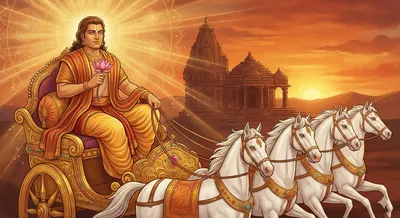
Surya: The Radiant Soul of the Cosmos
In the celestial parliament of the Navagrahas, the Sun reigns as sovereign—a cosmic monarch whose very presence illuminates both heaven and earth, embodying the eternal principle of consciousness itself.
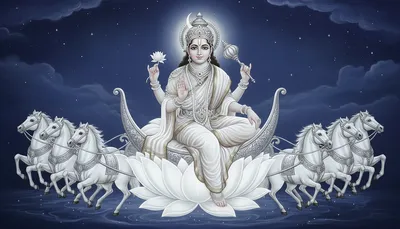
The Moon (Chandra): Sovereign of the Mind, Keeper of the Tides
In the ancient sky-map of Jyotisha, Chandra rises as the luminous reflection of the soul - the mind's mirror, ever waxing and waning with the pulse of creation.
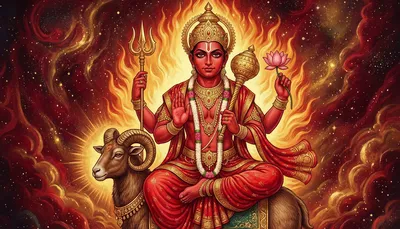
Mars (Mangala): The Crimson Warrior of the Celestial Realm
In the vast architecture of Jyotisha, Mars rises like a flame against the dark sky—fierce, unrelenting, and alive with the pulse of action.