Shani: Lord of Karma, The Slow-Moving Teacher of Patience and Justice
Son of the Sun and Shadow, Saturn embodies karmic justice and the patient accumulation of wisdom through experience. As the slowest of the visible planets, Shani teaches that time reveals all truth and rewards those who persist with humility and discipline.
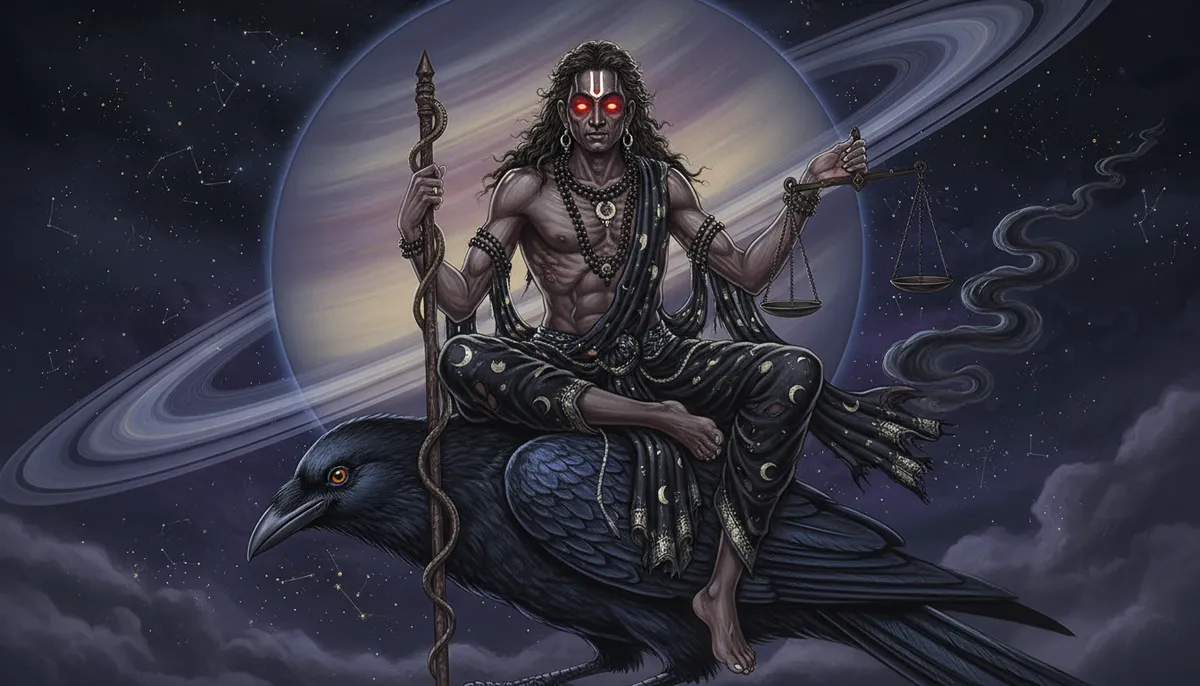
Essential Attributes at a Glance
| Attribute | Shani’s Nature |
|---|---|
| Sanskrit Name | Shani (Synonyms: Manda, Kona, Yama, Krishna) |
| Cosmic Role | Grief (Kalapurusha) |
| Cabinet Status | Servant |
| Nature | Natural Malefic |
| Gender | Neutral (Eunuch) |
| Caste | Sudra / Sankara (Mixed) |
| Guna | Tamasic (Indolent, long-sleeping) |
| Element | Air (Vayu) |
| Deity | Brahma |
| Color | Black / Dark |
| Taste | Astringent |
| Dosha (Humour) | Vata (Windy) |
| Directional Strength | West |
| Temporal Strength | Night |
| Natural Strength | Weakest among Grahas |
| Exaltation | Libra (20°) |
| Moolatrikona | Aquarius (0°–20°) |
| Own Signs | Capricorn; Aquarius (20°–30°) |
| Time Unit | Varsha (Year) |
| Season | Shishira (Winter) |
| Abode | Filthy ground |
| Apparel | Rags (Torn); Black; Multi-colored |
| Substance | Iron |
| Tree Type | Useless trees (thorny or ugly) |
| Classification | Dhatu (Metals/Minerals) |
| Friends | Mercury, Venus |
| Enemies | Sun, Moon, Mars |
| Neutrals | Jupiter |
| Special Aspects | 3rd and 10th houses (in addition to 7th) |
| Special Note | Eldest planet; bestows maximum longevity |
Astronomical Overview
Saturn stands as the most distant planet visible to the naked eye, a pale golden wanderer whose stately pace across the heavens mirrors its astrological nature of patience and perseverance. Orbiting at approximately 1.4 billion kilometers from the Sun, Saturn requires 29.5 Earth years to complete a single circuit of the zodiac—spending roughly two and a half years in each sign. This extraordinary slowness earned Saturn its Sanskrit epithet Manda, meaning “slow” or “sluggish.”
The planet’s famous ring system, first observed by Galileo in 1610, creates one of the most recognizable celestial spectacles. These rings, composed primarily of ice particles and rocky debris, extend hundreds of thousands of kilometers yet are remarkably thin—a paradox of vast extent coupled with delicate fragility that resonates with Saturn’s astrological themes of structure and limitation.
Saturn possesses 146 known moons, with Titan being the largest—the only moon in our solar system with a substantial atmosphere. Perhaps most remarkably, Saturn’s density is so low that it would float in water, were there an ocean vast enough to hold it. This peculiarity—immense size combined with lightness—speaks to the paradoxes Shani embodies: the heaviest karmic burden carried by the most patient, persistent effort over time.
The ancient seers, observing this distant, slow-moving point of light, recognized in it the qualities of time itself: inexorable, patient, revealing all things in their season, rewarding those who endure while humbling those who seek shortcuts.

Mythological Origins: Son of Sun and Shadow
The birth of Shani reveals one of Vedic mythology’s most compelling narratives—a story of devotion, misunderstanding, and the terrible power of a gaze that could eclipse even the Sun.
The Shadow Wife
The tale begins with Sanjna, daughter of Vishwakarma (the divine architect), who became the wife of Surya, the Sun God. Though devoted to her husband, Sanjna found his radiance unbearable—his brilliance burned her, making life together increasingly difficult. Unable to endure the intensity any longer, she made a fateful decision: she created from her own shadow a duplicate of herself called Chaya (literally “shadow”), instructing this shadow-self to care for her husband and children while she departed to perform penance in the forest.
Surya, unaware of the substitution, continued his divine duties while Chaya assumed the role of wife and mother.
Birth Through Penance
Chaya, though a shadow, was devoted to Lord Shiva. When she conceived Shani, she undertook an extraordinary penance—standing under the blazing sun without food, water, or shade, wholly absorbed in worship of Mahadeva. The divine vibrations of her worship permeated the child growing within her womb, creating an unbreakable bond between Shani and Shiva.
However, this penance under the relentless sun had another consequence: the child was born with a dark complexion, blackened by the very rays of his father. When Surya beheld his newborn son’s dark skin, so unlike his own radiant form, doubt clouded his mind. He questioned Chaya’s fidelity, wondering if this dark child could truly be his offspring.
The Gaze That Eclipsed the Sun
Shani, even as an infant, possessed a terrible power—his gaze could destroy whatever it fell upon. When his father insulted his mother and questioned his parentage, the child Shani looked at Surya in anger. That single glance caused the Sun to turn black, his chariot to halt, and his steeds to lose their luster. The light-giver himself was eclipsed by his own son’s gaze.
Surya, realizing something extraordinary had occurred, sought the counsel of Lord Shiva. Shiva revealed the truth: how Chaya had performed intense penance during her pregnancy, how the child’s dark color was a result of her austerities under the sun, and how Shani’s devotion to Shiva had granted him this fearsome power. Understanding his error, Surya sought reconciliation with his son, though the relationship between father and son would forever remain complex—the eternal tension between light and shadow, authority and discipline, that astrologers observe in the enmity between Sun and Saturn.
Brothers of Consequence
Shani’s brother is none other than Yama—the God of Death and divine judge of souls. Both brothers share a common domain: karma and its consequences. While Yama delivers judgment after death, Shani administers karmic lessons during life. The siblings also share a sister, Yamuna, who became the sacred river. Through Sanjna (before she departed), Shani’s half-siblings include Vaivasvata Manu (progenitor of humanity) and the Ashwini Kumaras (divine physicians).
The Legendary Tales
Three stories illustrate Shani’s impartial power:
Shani and Ganesha: When Goddess Parvati invited Shani to bless her newborn son Ganesha, Saturn warned that his gaze brought destruction. Parvati insisted. When Shani reluctantly glanced at the infant, Ganesha’s head was severed—leading to the famous story of the elephant head.
Shani and Hanuman: When Ravana imprisoned all nine planets, forcing them to occupy auspicious positions for his son Meghnad’s birth, Shani was locked in a dark cell. Lord Hanuman, searching for Sita in Lanka, heard Shani’s cries and freed him. In gratitude, Shani blessed Hanuman’s devotees with immunity from Saturn’s malefic effects.
King Vikramaditya: The legendary just king endured Sade Sati’s trials with equanimity, proving that even Saturn must honor dharma, and that those who accept karma with humility ultimately triumph.

Classical Description
The ancient seers describe Shani with an appearance that reflects his domain over time, hardship, and the consequences of action. The Phaladeepika portrays a figure of stark intensity: black-bodied with an emaciated physique, eyes that are red and hollow—sunken from witnessing the weight of karma across ages. His body reveals prominent veins and muscular definition despite his gaunt frame, suggesting strength earned through endurance rather than abundance.
Both the Brihat Parashara Hora Shastra and Phaladeepika emphasize features that speak to his nature: large nails and teeth—instruments of time’s inevitable grip—and coarse, unkempt hair. His appearance is described as old, dirty, and impure, not from neglect but from association with the lowest, most difficult aspects of existence that others prefer to ignore.
The texts note his lame gait—Saturn moves slowly, whether across the sky or through the domains of life. His temperament is described as indolent, unkind, foolish in the sense of caring nothing for social niceties, fierce when provoked, short-tempered, and a tale-bearer—one who remembers and reports all actions for karmic accounting.
The Vata (windy) constitution dominates his humoral nature, bringing qualities of dryness, coldness, irregularity, and the capacity to deplete—the very attributes that manifest when Saturn afflicts health or circumstances.
Essential Qualities
Element: Air (Vayu)
Shani belongs to the Air element, connecting him to movement, breath, and the nervous system—yet his particular expression of Air differs markedly from Mercury’s quicksilver intellect. Saturn’s Air is cold, dry, and depleting. It is the wind that strips leaves from trees, the breath that grows short with age, the movement that slows to stillness.
The Air element governs the spaces between things—the gaps, the separations, the distances. Saturn creates distance: between people through misunderstandings and delays, between desire and fulfillment through obstacles, between birth and death through the gift of longevity. This element also rules the nervous system, and Saturn’s afflictions often manifest as nerve disorders, anxiety, and conditions where communication between body parts breaks down.
Guna: Tamasic Nature
Among the three gunas—Sattva (purity), Rajas (passion), and Tamas (inertia)—Shani embodies Tamas in both its challenging and essential aspects. Tamas is the quality of darkness, heaviness, slowness, and rest. The texts specifically describe Saturn as “indolent, long-sleeping”—qualities associated with Tamas.
Yet Tamas serves crucial functions. It provides the inertia that grounds existence, the heaviness that creates stability, the darkness necessary for rest and regeneration. Without Tamas, there would be no sleep, no consolidation, no foundation. Saturn’s Tamasic nature forces confrontation with limitations—the boundaries that define what is possible and what must be accepted. The shadow work of spiritual growth requires Tamas: the willingness to descend into darkness, to face what has been denied, to sit with discomfort until wisdom emerges.
Dosha: Vata Constitution
Shani’s Vata (windy) constitution creates a temperament marked by:
- Dryness and coldness—both physical and emotional
- Irregularity in rhythms and patterns
- Capacity for both movement and depletion
- Sensitivity to changes in environment
- Tendency toward fear, anxiety, and worry
- Challenges with circulation and nervous function
- The aging process and its effects on vitality
Those under strong Saturn influence often exhibit Vata imbalances: dry skin, cracking joints, nervous temperament, irregular digestion, and sensitivity to cold. Saturn’s periods bring Vata-related health challenges that require grounding, warming, and nourishing remedies.
Deity: Brahma
The Brihat Parashara Hora Shastra assigns Brahma—the Creator among the Hindu trinity—as Saturn’s presiding deity. This association illuminates Saturn’s connection to the structure of existence itself. Brahma creates through time; his days and nights constitute cosmic cycles of creation and dissolution. Saturn, ruling years as his time unit and governing longevity, participates in this fundamental structuring of temporal existence.
The Brahma association also points to Saturn’s role in creating through limitation. Just as form requires boundaries to exist, life requires the structure that Saturn provides. The servant who disciplines, the constraints that shape, the time that measures—all partake of Brahma’s creative function expressed through limitation rather than expansion.
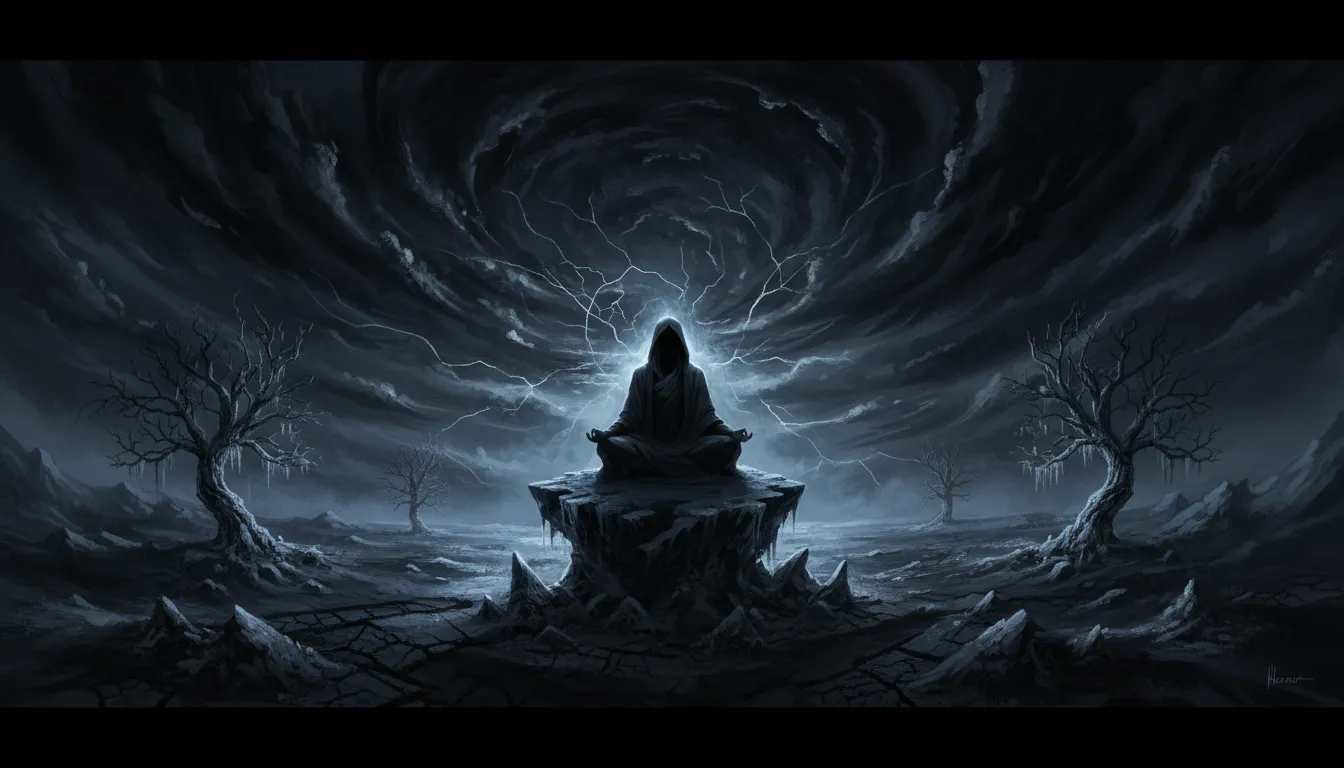
Physical, Emotional & Psychological Traits
Physical Characteristics
Those born under strong Saturnian influence often display the planet’s signature features:
- Tall, thin, or emaciated build—the body shaped by discipline rather than indulgence
- Dark or sallow complexion, or simply appearing older than their years
- Prominent bone structure, visible veins, defined musculature
- Large teeth and nails—features that time emphasizes
- Coarse or sparse hair, often graying early
- Issues with knees, legs, and joints—Saturn rules the structural system
- Slow, deliberate movements and a measured gait
- Features that suggest life experience and endurance
There is a gravity to Saturn-dominant individuals—they carry weight, whether of responsibility, wisdom, or sorrow. Their presence conveys substance rather than lightness.
Emotional Nature
Emotionally, Saturn natives possess depth that runs beneath surface expression. The positive expression includes:
- Capacity for profound patience and endurance
- Emotional resilience built through adversity
- Loyalty that deepens over time rather than fading
- Appreciation for what is earned rather than given
- Emotional sobriety and groundedness
- Ability to maintain composure in crisis
The shadow aspects of Saturnian emotionality include:
- Tendency toward depression, melancholy, and pessimism
- Difficulty expressing warmth and affection
- Emotional coldness or unavailability
- Fear of loss leading to excessive control
- Holding grudges and difficulty forgiving
- Isolation and loneliness, often self-imposed
Psychological Profile
Psychologically, Saturn governs the reality principle—the capacity to delay gratification, accept limitations, and build through persistent effort:
- Strong sense of duty, responsibility, and obligation
- Methodical, systematic approach to problems
- Mastery of delayed gratification—the ability to work now for future reward
- Respect for structure, tradition, and established systems
- Serious demeanor and difficulty with frivolity
- Deep understanding of time’s passage and mortality
- Capacity for sustained concentration and effort
Saturn-dominant individuals often become masters of their chosen fields through sheer persistence. They understand that excellence requires thousands of hours, that shortcuts lead to collapse, that what is built slowly endures.
Symbolism & Mythic Archetypes
The Servant-King Paradox
In the celestial cabinet, Saturn holds the lowest position—Servant—yet wields power that kings and ministers fear. This paradox reveals a profound truth: those who serve karma, who work within dharma’s constraints rather than against them, ultimately possess more power than those who rule through force or charm.
The servant archetype teaches humility, the recognition that all beings—even kings—serve something greater. Saturn’s service is to Time itself, to the cosmic order that ensures consequences follow actions. Through service comes mastery; through acceptance of limitation comes freedom.
Karma’s Perfect Accountant
Saturn maintains the cosmic ledger with absolute precision. No action is lost, no consequence avoided, no debt left unpaid. This accounting function operates without malice—Saturn doesn’t punish; he balances. What appears as punishment is simply the return of what was sent forth, often with interest accumulated over time.
The accountant archetype reminds us that the universe operates on perfect justice, even when human perception cannot grasp the accounts being balanced. Saturn’s periods bring debts due—but also credits earned through past good actions.
The Great Teacher
While Jupiter teaches through expansion, blessing, and grace, Saturn teaches through contraction, limitation, and experience. Saturn’s lessons are harder but often more lasting. He teaches:
- Patience: through delays and obstacles
- Humility: through failure and reduction
- Discipline: through consequences of indiscipline
- Wisdom: through suffering that reveals truth
- Endurance: through trials that build strength
The teacher archetype operates on the principle that what is easily gained is easily lost. Saturn’s gifts—whether material success, wisdom, or longevity—come through effort and are therefore truly owned by those who receive them.
Time’s Embodiment (Kala)
As the slowest of the visible planets, Saturn embodies Time in its most patient, inexorable form. He represents the truth that everything reveals itself in time—lies are exposed, virtue is recognized, accounts are settled. Nothing escapes Time’s eventual reckoning.
The Kala archetype teaches acceptance of temporal existence: birth, aging, death, and the cycles that continue beyond individual lives. Saturn’s rulership of longevity connects to this—he determines how long the soul inhabits this particular body, how much time remains to complete the work of this incarnation.
The Renunciate
Saturn strips away: possessions, relationships, illusions, and attachments. This stripping function, though painful, creates the conditions for spiritual liberation. The renunciate archetype appears when Saturn removes what was never truly ours, revealing the permanent amid the impermanent.
Those who embrace this archetype voluntarily—through spiritual practice, simple living, and non-attachment—often find Saturn’s periods bring deepening rather than destruction. What is willingly released cannot be painfully removed.
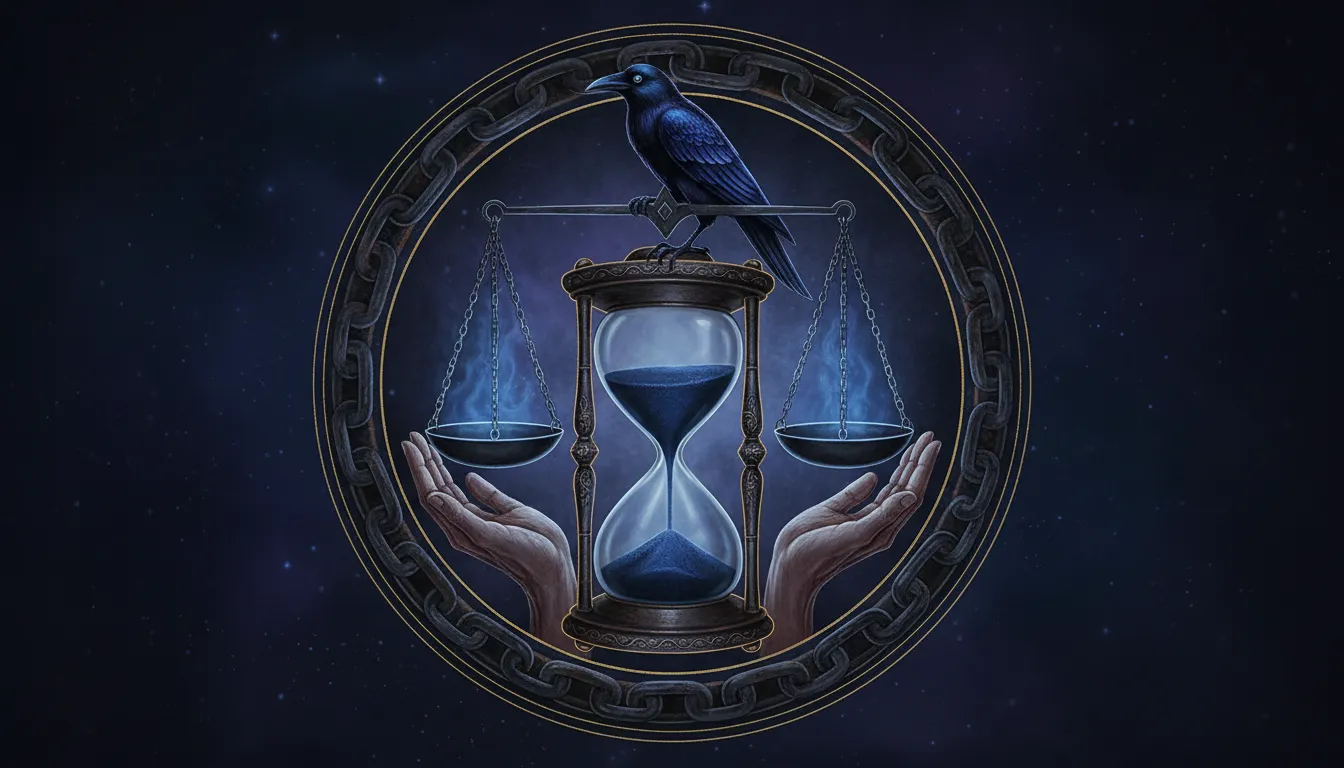
Significations (Karakatvas)
Saturn serves as karaka—natural significator—for aspects of life united by themes of time, limitation, labor, and the consequences of action.
Primary Domains
- Grief (Shoka): Sorrow, misery, suffering—Saturn’s primary karaka status per classical texts
- Longevity (Ayus): The span of life—Saturn bestows maximum longevity
- Death: The timing and circumstances of life’s end
- Livelihood: Labor, work, the means of earning
- Discipline: Structure, restriction, limitation
- Karma: The consequences of past actions manifesting in present circumstances
Relationships
- Servants and Laborers: Those who work under others’ direction
- Old People: The elderly and aged
- Outcasts: The marginalized, downtrodden, and rejected
- Widows and Widowers: Those touched by death’s separation
- Spiritual Renunciates: Sannyasis who have renounced worldly attachments
- Foreign People: Those from distant lands or different cultures
Body & Health
- Legs and Knees: The weight-bearing structures
- Bones, Teeth, and Nails: The hardest, most enduring tissues
- Nervous System: Particularly conditions involving degeneration
- Chronic Diseases: Conditions that persist over time
- Vata Disorders: Arthritis, paralysis, nerve conditions
- Skin: Particularly conditions involving dryness or discoloration
- Hearing: Particularly loss associated with age
Substances & Materials
- Iron: Saturn’s primary metal—strong through tempering
- Lead: Heavy, dark, associated with age
- Black and Dark Blue Colors: Reflecting Saturn’s complexion
- Sesame (Til): Both black and white sesame, used in Saturn remedies
- Mustard Oil: Used in Saturday lamps for Saturn propitiation
- Blue Sapphire (Neelam): Saturn’s gemstone—powerful and requiring caution
- Coal and Dark Stones: Materials formed through time and pressure
Places & Settings
- Filthy Places: Rubbish heaps, dumps, sewers—what society discards
- Prisons: Places of confinement and restriction
- Hospitals: Especially for chronic conditions
- Cremation Grounds: The final dissolution
- Mines: Deep in the earth, extracting what time has compressed
- Old Buildings: Structures showing time’s passage
- Monasteries: Places of voluntary renunciation
Professions & Activities
- Labor and Construction: Building through persistent effort
- Mining and Extraction: Working with what lies beneath
- Agriculture: The patience of seasons and harvest
- Service Industries: Work serving others’ needs
- Judiciary and Law Enforcement: Administration of consequences
- Undertakers: Those who handle death
- Ascetics and Monks: Lives of discipline and renunciation
- Researchers: Patient investigation over time
Temporal Rulership
- Saturday (Shanivar): Saturn’s day, observed with fasting and charity
- Year (Varsha): Saturn’s time unit—the longest among planets
- Winter (Shishira): The cold, dark season of Saturn’s strength
- Night: Saturn gains strength after sunset
Nakshatra Rulership
Saturn rules three nakshatras, each expressing different dimensions of Saturnian energy:
-
Pushya (3°20’ – 16°40’ Cancer): “The Nourisher”—despite Cancer’s lunar nature, Saturn brings discipline to nourishment. Symbol: cow’s udder or flower. Deity: Brihaspati. Here Saturn teaches through service, creating dutiful, hardworking individuals devoted to family and community welfare.
-
Anuradha (3°20’ – 16°40’ Scorpio): “Following Radha” or “Subsequent Success”—in Mars’s intense sign, Saturn brings depth to devotion. Symbol: lotus flower or triumphal archway. Deity: Mitra (god of friendship). This nakshatra produces loyal, devoted individuals who succeed through persistence despite obstacles, forming deep friendships that endure.
-
Uttara Bhadrapada (3°20’ – 16°40’ Pisces): “The Latter Lucky Feet”—in Jupiter’s sign of dissolution, Saturn reaches its most spiritual expression. Symbol: back legs of a funeral cot or serpent in water. Deity: Ahir Budhanya (serpent of the depths). This nakshatra governs spiritual depth, detachment, and the wisdom gained through renunciation.
The common thread across Saturn’s nakshatras is depth—of devotion, friendship, and spiritual realization—achieved through patience and persistence.
Strengths & Challenges
Inherent Strengths
Exaltation in Libra (20°) Saturn reaches its maximum expression at 20 degrees of Libra—Venus’s sign of balance, justice, and relationship. Here, Saturn’s impartial judgment finds perfect expression. The planet of karma in the sign of balance creates the ideal judge: one who weighs all factors, considers all perspectives, and delivers verdicts with fairness. An exalted Saturn grants exceptional organizational abilities, diplomatic skill, and the capacity to create lasting structures that serve all parties.
Moolatrikona in Aquarius (0°–20°) In the first twenty degrees of Aquarius, Saturn operates with natural authority and efficiency. Here, Saturnian themes of service, structure, and social responsibility reach their highest expression. The humanitarian impulse combines with disciplined effort, producing reformers who work patiently to improve systems for collective benefit.
Own Sign Dignity Saturn rules both Capricorn and Aquarius, providing two signs where it operates with full authority:
- Capricorn emphasizes Saturn’s material dimensions: ambition, structure, achievement through persistent effort, and the climb toward worldly success
- Aquarius emphasizes Saturn’s collective dimensions: humanitarian concerns, democratic ideals, scientific inquiry, and service to larger causes
Yogakaraka Status For Taurus and Libra ascendants, Saturn becomes a yogakaraka—a single planet ruling both a kendra (angle) and trikona (trine), capable of producing exceptional results. This transforms Saturn from a challenging influence into a source of substantial benefit.
Special Aspects Saturn alone among planets casts special full aspects to the 3rd and 10th houses from its position (in addition to the standard 7th aspect). These aspects extend Saturn’s influence widely:
- The 3rd aspect affects courage, siblings, and short journeys
- The 10th aspect directly impacts career and public status
Challenges & Weaknesses
Natural Malefic Status Saturn is classified as a natural malefic—an influence that creates difficulty regardless of house position. Even when well-placed, Saturn brings its nature of delay, restriction, and labor to whatever it touches.
Debilitation in Aries Saturn falls to its weakest at 20 degrees of Aries, where Mars’s fiery, impulsive nature conflicts directly with Saturn’s patient, methodical approach. Debilitated Saturn creates frustration—the desire to act quickly thwarted by circumstances, impatience leading to poor decisions, and the inability to sustain effort long enough to achieve results.
Weakest Natural Strength Among the seven traditional planets, Saturn ranks as the weakest in natural strength. This means Saturn’s positive effects manifest more slowly and require more effort to activate, while its challenging effects can overwhelm other influences.
Sade Sati Saturn’s transit through the 12th, 1st, and 2nd houses from the natal Moon creates the famous seven-and-a-half-year period of testing called Sade Sati. This period brings accumulated karma to fruition, often through challenges in health, career, relationships, and mental peace.
Physical Vulnerabilities When Saturn is afflicted, certain health patterns manifest:
- Joint problems: arthritis, rheumatism, knee issues
- Bone conditions: osteoporosis, dental problems
- Nervous disorders: paralysis, nerve degeneration
- Chronic conditions: diseases that persist and progress slowly
- Vata imbalances: gas, constipation, dryness, coldness
Planetary Relationships
| Relationship | Planets |
|---|---|
| Friends | Mercury, Venus |
| Enemies | Sun, Moon, Mars |
| Neutrals | Jupiter |
Saturn’s relationship pattern reveals the cosmic tensions between different principles of existence:
Friendship with Mercury unites patience with intelligence, discipline with adaptability. Mercury’s quick mind benefits from Saturn’s depth; Saturn’s slowness gains Mercury’s communicative ability. This alliance produces scholars who build knowledge systematically, businesspeople who plan for long-term success, and craftspeople whose skill develops over years of practice.
Friendship with Venus connects discipline with pleasure, limitation with beauty. Venus makes Saturn’s path bearable; Saturn gives Venus’s creations lasting form. This surprising alliance explains why great art requires both inspiration (Venus) and craft developed through years of practice (Saturn).
Enmity with the Sun reflects the fundamental tension between ego and humility, rulership and service, father and son. The mythology records this conflict directly—Shani’s gaze eclipsing his father Surya. In charts, Sun-Saturn combinations create tensions between self-expression and duty, between individual will and collective obligation.
Enmity with the Moon creates conflict between emotional needs and harsh reality, between nurturing and discipline, between comfort and growth through hardship. Saturn’s cold, dry nature opposes Moon’s moist, nurturing essence. This combination often indicates emotional difficulties, depression, and challenges with the mother or mothering.
Enmity with Mars pits patience against aggression, slow building against quick action, endurance against force. Mars wants immediate results; Saturn delays. Mars destroys obstacles; Saturn works around them. When these two combine, the result can be either frustrated aggression or disciplined strength, depending on dignity and aspects.
Neutrality toward Jupiter maintains the balance between the two great teachers. Jupiter expands where Saturn contracts; Jupiter blesses while Saturn tests. Neither opposes the other fundamentally—both serve spiritual evolution through different methods. Their combined influence brings structured growth, disciplined expansion, and wisdom earned through experience.
Classical Reference Notes
This portrait of Shani synthesizes descriptions from the principal texts of Jyotisha, which show substantial agreement while offering complementary details:
Brihat Parashara Hora Shastra establishes Saturn’s cabinet status as Servant (the lowest position), assigns the Air element and Sudra caste, and notes the Vata (windy) constitution. It specifies exaltation at 20° Libra, Moolatrikona from 0°–20° Aquarius, and own sign rulership of both Capricorn and Aquarius. The text assigns West as Saturn’s direction and notes his signification of grief as the primary karaka. BPHS specifically mentions that Saturn is the eldest planet and bestows maximum longevity.
Phaladeepika provides the synonyms Manda (Slow), Kona, Yama, and Krishna (Dark/Black), connecting Saturn to slowness, death, and darkness. It details the physical appearance: black-bodied, emaciated, red and hollow eyes, prominent veins, muscular, large nails and teeth, old, dirty, impure. The text notes the Tamasic guna (“indolent, long-sleeping”), assigns iron as the substance, and designates Brahma as the presiding deity. Phaladeepika specifically describes Saturn’s temperament as indolent, unkind, foolish, fierce, short-tempered, and a tale-bearer—one who remembers all.
Notable Consistency: Unlike some planets where the texts differ on directional strength, both BPHS and Phaladeepika agree that Saturn’s directional strength lies in the West. The texts also consistently agree on Saturn’s special aspects—the 3rd and 10th houses in addition to the standard 7th house aspect—a feature unique to Saturn among the planets.
Consistent across texts:
- Agreement on Saturn as a natural malefic and the weakest in natural strength
- Consistent assignment of Servant status and Air element
- Agreement on exaltation in Libra and debilitation in Aries
- Consistent emphasis on grief, longevity, death, and labor as significations
- Universal recognition of Vata constitution and Tamasic guna
Closing Reflection
Saturn invites us to consider the hidden gifts within limitation, the wisdom concealed within suffering, the strength forged through patient endurance. In a world that celebrates speed, expansion, and instant gratification, Shani offers a different teaching: that what comes slowly endures, what is earned through effort truly belongs to us, and what strips away illusion ultimately liberates.
As the son of Sun and Shadow, Saturn embodies the paradox that light creates darkness even as darkness reveals light. His gaze that eclipsed his own father teaches that even the highest powers must face consequences, that even the source of light has shadows. This impartiality—applying equally to gods and mortals—makes Saturn the most just of the Grahas.
To know Saturn in your chart is to know where patience is required, where karma must be faced, where the slow work of building endures beyond quick gains. It marks the sphere where time itself teaches, where limitations define the shape of possibility, where the servant’s path leads to unexpected mastery.
The mythology reminds us that Saturn, born through his mother’s intense devotion to Shiva, carries that devotion as his essential nature. Those who approach Saturn through spiritual practice, through acceptance rather than resistance, through service rather than complaint, find in this fearsome planet a powerful ally. He who imprisoned the Sun blesses Hanuman’s devotees with protection—suggesting that faith and service transform Saturn from punisher to protector.
May Shani’s slow, steady wisdom guide you toward the patience that outlasts obstacles and the endurance that earns what cannot be taken away.
Explore the Navagraha
This article is part of our comprehensive series on the nine celestial powers of Vedic astrology. Discover how all the grahas work together in the cosmic parliament:
The Complete Guide to Navagraha: Nine Planets of Vedic Astrology →
References
This article synthesizes knowledge from the following classical Vedic astrology texts:
-
Brihat Parashara Hora Shastra - The foundational text of Vedic astrology attributed to Sage Parashara, detailing planetary characteristics, significations, dignities, and interpretive principles.
-
Phaladeepika - A classical text by Mantreshwara offering detailed descriptions of planetary qualities, physical appearances, synonyms, and predictive techniques.
These ancient texts form the bedrock of Vedic astrological wisdom, passed down through generations of practitioners and scholars.
Want to discover how Saturn influences your personal birth chart? Join our waitlist for personalized Vedic astrology insights when Lopamudra launches.
Related Articles
Surya: The Radiant Soul of the Cosmos
In the celestial parliament of the Navagrahas, the Sun reigns as sovereign—a cosmic monarch whose very presence illuminates both heaven and earth, embodying the eternal principle of consciousness itself.
The Moon (Chandra): Sovereign of the Mind, Keeper of the Tides
In the ancient sky-map of Jyotisha, Chandra rises as the luminous reflection of the soul - the mind's mirror, ever waxing and waning with the pulse of creation.
Mars (Mangala): The Crimson Warrior of the Celestial Realm
In the vast architecture of Jyotisha, Mars rises like a flame against the dark sky—fierce, unrelenting, and alive with the pulse of action.