Dwadasha Rashi: Complete Guide to the 12 Zodiac Signs in Vedic Astrology
Discover the 12 rashis of Vedic astrology—from Aries to Pisces. Learn the Kalapurusha body mapping, classification systems, planetary rulerships, and how each zodiac sign shapes destiny according to classical Jyotish texts.
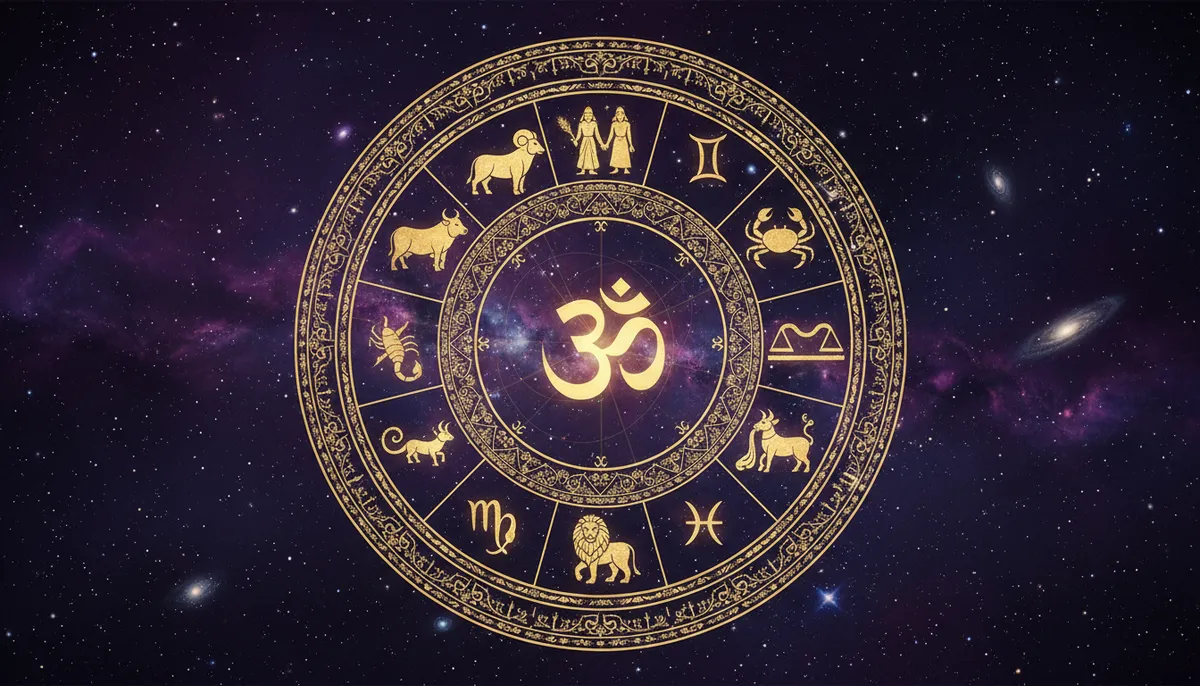
The zodiac of Vedic astrology comprises twelve rashis—cosmic divisions that together form the celestial wheel upon which all astrological interpretation rests. Unlike the Western tropical zodiac aligned to seasons, the Vedic sidereal zodiac tracks the actual constellations, creating a system rooted in the observable heavens.
The zodiac is divided into 12 equal parts called Rashis (signs) commencing from Aries.
These twelve signs are not arbitrary divisions but represent the limbs of a cosmic being—Kalapurusha, Time itself personified as a celestial man. Understanding this framework reveals why Vedic astrology considers each rashi more than a personality type: each sign embodies a specific divine function within the architecture of existence.
In Jyotish, while Western astrology emphasizes the Sun sign, the Moon sign (Chandra Rashi) takes precedence. The Moon governs the mind (manas), and since our mental state shapes how we perceive and respond to life, the lunar position reveals the core emotional and psychological constitution of the native.
Kalapurusha: The Cosmic Man
At the heart of Vedic astrology lies a profound concept: the zodiac as the body of cosmic time itself.
Sri Vishnu, the Invisible, is Time personified. His limbs are the 12 Rāśhis commencing from Aries.
This cosmic man—Kalapurusha—represents the universe as a divine being whose body parts correspond to the twelve zodiac signs. When planets occupy different signs, they influence the corresponding regions of the cosmic anatomy, and by extension, the same areas in human beings.
The signs Aries etc., represent the limbs of Kalapurusha: Aries-head, Taurus-face, Gemini-arms, Cancer-heart, Leo-stomach, Virgo-hip, Libra-space below navel and private parts, Scorpio-private parts, Sagittarius-thighs, Capricorn-knees, Aquarius-ankles, Pisces-feet.
The Divine Body Mapping
| Rashi | Sanskrit | Body Part | Significance |
|---|---|---|---|
| 1. Aries | Mesha | Head | Leadership, identity, intellect |
| 2. Taurus | Vrishabha | Face/Mouth | Speech, nourishment, beauty |
| 3. Gemini | Mithuna | Arms/Shoulders | Communication, skills, dexterity |
| 4. Cancer | Karka | Heart/Chest | Emotions, nurturing, feelings |
| 5. Leo | Simha | Stomach/Belly | Digestion, willpower, vitality |
| 6. Virgo | Kanya | Hip/Waist | Service, health, analysis |
| 7. Libra | Tula | Lower Abdomen | Balance, partnerships, desires |
| 8. Scorpio | Vrishchika | Generative Organs | Transformation, secrets, regeneration |
| 9. Sagittarius | Dhanu | Thighs | Movement, dharma, higher pursuits |
| 10. Capricorn | Makara | Knees | Structure, responsibility, perseverance |
| 11. Aquarius | Kumbha | Calves/Ankles | Circulation, networks, distribution |
| 12. Pisces | Meena | Feet | Foundation, liberation, endings |
This mapping serves practical purposes: planets afflicting a particular sign may indicate health vulnerabilities in the corresponding body region. A malefic in Aries, for instance, might suggest head-related ailments, while troubles in Pisces could manifest as foot problems.
Beyond physical correspondence, Kalapurusha reveals the spiritual journey from head (individual consciousness in Aries) to feet (universal dissolution in Pisces)—the soul’s descent into matter and eventual liberation.
Classification Systems
The ancient sages classified the rashis through multiple overlapping systems, each revealing different dimensions of zodiacal nature. Mastering these classifications unlocks deeper interpretive power.
By Element (Tattva)
The four elements distribute among the signs, creating triplicities of shared elemental nature:
| Element | Sanskrit | Signs | Nature |
|---|---|---|---|
| Fire | Agni Tattva | Aries, Leo, Sagittarius | Transformative, energetic, inspiring |
| Earth | Prithvi Tattva | Taurus, Virgo, Capricorn | Practical, grounded, material |
| Air | Vayu Tattva | Gemini, Libra, Aquarius | Intellectual, social, communicative |
| Water | Jala Tattva | Cancer, Scorpio, Pisces | Emotional, intuitive, flowing |
Fire signs initiate and transform. Earth signs build and preserve. Air signs connect and communicate. Water signs feel and intuit. Planets express their energies differently depending on the elemental nature of their host sign.
By Modality (Cardinal, Fixed, Dual)
The three modalities describe how signs engage with action and change:
| Modality | Sanskrit | Signs | Nature |
|---|---|---|---|
| Cardinal/Movable | Chara | Aries, Cancer, Libra, Capricorn | Initiating, active, dynamic |
| Fixed | Sthira | Taurus, Leo, Scorpio, Aquarius | Stable, persistent, resistant |
| Mutable/Dual | Dwiswabhava | Gemini, Virgo, Sagittarius, Pisces | Adaptable, flexible, transitional |
Movable signs are Aries, Cancer, Libra and Capricorn, characterized by initiating energy and change.
Fixed signs (Sthira Rashi) are Taurus, Leo, Scorpio, and Aquarius.
Dual signs are Gemini, Virgo, Sagittarius and Pisces, characterized by adaptability and duality.
Cardinal signs begin new cycles at the equinoxes and solstices. Fixed signs consolidate and deepen. Dual signs transition between seasons and embody flexibility.
By Gender
Signs alternate between masculine and feminine polarity:
| Gender | Sanskrit | Signs |
|---|---|---|
| Male | Purusha Rashi | Aries, Gemini, Leo, Libra, Sagittarius, Aquarius |
| Female | Stri Rashi | Taurus, Cancer, Virgo, Scorpio, Capricorn, Pisces |
Masculine (odd) signs tend toward externalization, action, and projection. Feminine (even) signs incline toward internalization, reception, and preservation.
By Rising Type
A unique Vedic classification describes how signs rise on the eastern horizon:
| Rising Type | Sanskrit | Signs | Day/Night Strength |
|---|---|---|---|
| Head-first | Shirshodaya | Gemini, Leo, Virgo, Libra, Scorpio, Aquarius | Strong by day |
| Back-first | Prishthodaya | Aries, Taurus, Cancer, Sagittarius, Capricorn | Strong by night |
| Both | Ubhayodaya | Pisces | Strong at both times |
Taurus, Cancer, Sagittarius, Aries and Capricorn rise with their back (Prishtodaya). Gemini and Pisces come under Ubhayodaya (rising both ways). The rest appear with their heads and are termed Sirshodaya signs.
Shirshodaya signs gain strength when rising during daytime; Prishthodaya signs favor nighttime births. This distinction affects the overall vitality of the ascendant.
By Creature Type
Signs are classified by the creatures they represent:
| Type | Sanskrit | Signs |
|---|---|---|
| Biped (Human) | Dwipada | Gemini, Virgo, Libra, Aquarius, first half of Sagittarius |
| Quadruped (Animal) | Chatushpada | Aries, Taurus, Leo, second half of Sagittarius, first half of Capricorn |
| Centipede/Insect | Keeta | Cancer, Scorpio |
| Footless/Water | Jalachara | Pisces, second half of Capricorn |
Quadruped signs are Aries, Taurus, Leo, Sagittarius and Capricorn.
This classification aids in prediction, particularly regarding questions about animals, travel, and the nature of events.
Planetary Rulership
Each rashi falls under the governance of a planetary lord who shapes its essential character:
| Planet | Signs Ruled | Mooltrikona Position |
|---|---|---|
| Sun (Surya) | Leo | Leo 0°-20° |
| Moon (Chandra) | Cancer | Taurus 3°-30° |
| Mars (Mangala) | Aries, Scorpio | Aries 0°-12° |
| Mercury (Budha) | Gemini, Virgo | Virgo 15°-20° |
| Jupiter (Guru) | Sagittarius, Pisces | Sagittarius 0°-10° |
| Venus (Shukra) | Taurus, Libra | Libra |
| Saturn (Shani) | Capricorn, Aquarius | Aquarius 0°-20° |
The Sun and Moon each rule one sign, while the five visible planets rule two signs each—one masculine, one feminine. Rahu and Ketu, the shadow planets, also hold special affinity with certain signs: Rahu with Aquarius (and by some accounts Virgo), Ketu with Scorpio (and by some accounts Pisces).
Learn more about planetary natures in our Navagraha guide →
Exaltation and Debilitation
Planets reach their peak strength (exaltation) and lowest ebb (debilitation) at specific zodiacal degrees:
| Planet | Exalted In | Degree | Debilitated In | Degree |
|---|---|---|---|---|
| Sun | Aries | 10° | Libra | 10° |
| Moon | Taurus | 3° | Scorpio | 3° |
| Mars | Capricorn | 28° | Cancer | 28° |
| Mercury | Virgo | 15° | Pisces | 15° |
| Jupiter | Cancer | 5° | Capricorn | 5° |
| Venus | Pisces | 27° | Virgo | 27° |
| Saturn | Libra | 20° | Aries | 20° |
These dignities profoundly affect planetary expression. An exalted planet operates at full capacity; a debilitated planet struggles to manifest its significations beneficially.
The 12 Rashis: Quick Reference
Mesha (Aries) — The Ram
| Attribute | Value |
|---|---|
| Ruler | Mars |
| Element | Fire |
| Modality | Cardinal (Chara) |
| Body Part | Head |
| Direction | East |
| Color | Blood-red |
The first sign initiates the zodiac with Martian courage and pioneering spirit. Mesha natives are natural leaders, quick to act, and unafraid of confrontation.
Complete guide to Mesha (Aries) →
Vrishabha (Taurus) — The Bull
| Attribute | Value |
|---|---|
| Ruler | Venus |
| Element | Earth |
| Modality | Fixed (Sthira) |
| Body Part | Face/Mouth |
| Direction | South |
| Color | White |
The steadfast bull embodies Venusian sensuality grounded in earthly stability. Vrishabha natives value comfort, beauty, and the accumulation of resources.
Complete guide to Vrishabha (Taurus) →
Mithuna (Gemini) — The Twins
| Attribute | Value |
|---|---|
| Ruler | Mercury |
| Element | Air |
| Modality | Dual (Dwiswabhava) |
| Body Part | Arms/Shoulders |
| Direction | West |
| Color | Green |
The celestial twins express Mercury’s intellectual versatility and communicative gifts. Mithuna natives excel in learning, writing, and making connections.
Complete guide to Mithuna (Gemini) →
Karka (Cancer) — The Crab
| Attribute | Value |
|---|---|
| Ruler | Moon |
| Element | Water |
| Modality | Cardinal (Chara) |
| Body Part | Heart/Chest |
| Direction | North |
| Color | Pale red/Pink |
The lunar crab holds dominion over emotions, nurturing, and domestic life. Karka natives possess deep intuition and strong attachment to home and family.
Complete guide to Karka (Cancer) →
Simha (Leo) — The Lion
| Attribute | Value |
|---|---|
| Ruler | Sun |
| Element | Fire |
| Modality | Fixed (Sthira) |
| Body Part | Stomach/Belly |
| Direction | East |
| Color | Whitish/Cream |
The royal lion channels solar authority, creativity, and commanding presence. Simha natives naturally gravitate toward leadership and creative self-expression.
Complete guide to Simha (Leo) →
Kanya (Virgo) — The Virgin
| Attribute | Value |
|---|---|
| Ruler | Mercury |
| Element | Earth |
| Modality | Dual (Dwiswabhava) |
| Body Part | Hip/Waist |
| Direction | South |
| Color | Variegated/Grey |
The discerning virgin represents Mercurial analysis applied to practical service. Kanya natives excel at detailed work, health matters, and systematic improvement.
Complete guide to Kanya (Virgo) →
Tula (Libra) — The Scales
| Attribute | Value |
|---|---|
| Ruler | Venus |
| Element | Air |
| Modality | Cardinal (Chara) |
| Body Part | Lower Abdomen |
| Direction | West |
| Color | Black |
The balanced scales embody Venusian harmony in the realm of relationships and justice. Tula natives seek equilibrium, beauty, and fair dealings in all matters.
Complete guide to Tula (Libra) →
Vrishchika (Scorpio) — The Scorpion
| Attribute | Value |
|---|---|
| Ruler | Mars |
| Element | Water |
| Modality | Fixed (Sthira) |
| Body Part | Generative Organs |
| Direction | North |
| Color | Reddish-brown |
The penetrating scorpion combines Martian intensity with watery depth. Vrishchika natives possess profound emotional power, investigative minds, and transformative capacity.
Complete guide to Vrishchika (Scorpio) →
Dhanu (Sagittarius) — The Archer
| Attribute | Value |
|---|---|
| Ruler | Jupiter |
| Element | Fire |
| Modality | Dual (Dwiswabhava) |
| Body Part | Thighs |
| Direction | East |
| Color | Tawny/Golden |
The celestial archer aims Jupiter’s wisdom toward higher truth and dharmic purpose. Dhanu natives are philosophical seekers, teachers, and adventurers.
Complete guide to Dhanu (Sagittarius) →
Makara (Capricorn) — The Sea-Goat
| Attribute | Value |
|---|---|
| Ruler | Saturn |
| Element | Earth |
| Modality | Cardinal (Chara) |
| Body Part | Knees |
| Direction | South |
| Color | Variegated |
The climbing sea-goat expresses Saturnian discipline in worldly achievement. Makara natives build lasting structures through patience, responsibility, and persistent effort.
Complete guide to Makara (Capricorn) →
Kumbha (Aquarius) — The Water-Bearer
| Attribute | Value |
|---|---|
| Ruler | Saturn |
| Element | Air |
| Modality | Fixed (Sthira) |
| Body Part | Calves/Ankles |
| Direction | West |
| Color | Deep brown |
The water-bearer distributes Saturnian wisdom to humanity through networks and ideals. Kumbha natives champion humanitarian causes, innovation, and collective progress.
Complete guide to Kumbha (Aquarius) →
Meena (Pisces) — The Fish
| Attribute | Value |
|---|---|
| Ruler | Jupiter |
| Element | Water |
| Modality | Dual (Dwiswabhava) |
| Body Part | Feet |
| Direction | North |
| Color | White |
The two fish swimming in opposite directions embody Jupiter’s spiritual wisdom dissolving into cosmic unity. Meena natives are intuitive, compassionate, and drawn to transcendence.
Complete guide to Meena (Pisces) →
Directional & Cosmic Correspondences
Direction by Element
The four elements align with the four cardinal directions:
Directions of Rasis: Aries, Leo and Sagittarius-East; Taurus, Virgo and Capricorn-South; Gemini, Libra and Aquarius-West; Cancer, Scorpio and Pisces-North.
| Direction | Element | Signs |
|---|---|---|
| East | Fire | Aries, Leo, Sagittarius |
| South | Earth | Taurus, Virgo, Capricorn |
| West | Air | Gemini, Libra, Aquarius |
| North | Water | Cancer, Scorpio, Pisces |
This directional mapping aids in Vastu (spatial arrangement), muhurta (electional astrology), and prashna (horary questions about directions).
Guna Assignment
The three fundamental qualities of nature distribute among the signs:
| Guna | Nature | Signs |
|---|---|---|
| Sattvic | Pure, spiritual, harmonious | Cancer, Leo, Sagittarius, Pisces |
| Rajasic | Active, passionate, worldly | Aries, Libra |
| Tamasic | Dense, inert, material | Taurus, Gemini, Virgo, Scorpio, Capricorn, Aquarius |
Sattvic signs favor spiritual pursuits; Rajasic signs drive worldly ambition; Tamasic signs ground energy in material manifestation.
Color Correspondences
Colours of Rasis from Aries onwards: red, white, green, pink, brown, grey, variegated, black, golden, yellow, deep brown and white.
These traditional colors serve in remedy selection, gem recommendation, and ritual applications.
Sign Relationships
Opposite Pairs (1-7 Axis)
Each sign has a natural opposite that complements and challenges it:
| Axis | Signs | Theme |
|---|---|---|
| 1-7 | Aries ↔ Libra | Self vs. Partnership |
| 2-8 | Taurus ↔ Scorpio | Resources vs. Transformation |
| 3-9 | Gemini ↔ Sagittarius | Information vs. Wisdom |
| 4-10 | Cancer ↔ Capricorn | Home vs. Career |
| 5-11 | Leo ↔ Aquarius | Individual vs. Collective |
| 6-12 | Virgo ↔ Pisces | Analysis vs. Synthesis |
Planets in opposite signs create awareness through tension, forcing integration of complementary qualities.
Triplicities (Same Element)
Signs sharing an element form natural alliances:
- Fire Triplicity: Aries, Leo, Sagittarius — united in energy, inspiration, and will
- Earth Triplicity: Taurus, Virgo, Capricorn — united in practicality, stability, and manifestation
- Air Triplicity: Gemini, Libra, Aquarius — united in intellect, communication, and social connection
- Water Triplicity: Cancer, Scorpio, Pisces — united in emotion, intuition, and depth
Planets moving through triplicity signs strengthen elemental themes in the native’s life.
Quadruplicities (Same Modality)
Signs sharing modality face similar challenges of action:
- Cardinal Signs (Aries, Cancer, Libra, Capricorn): Initiation and new beginnings
- Fixed Signs (Taurus, Leo, Scorpio, Aquarius): Consolidation and persistence
- Dual Signs (Gemini, Virgo, Sagittarius, Pisces): Adaptation and transition
The cardinal signs mark the equinoxes and solstices; fixed signs stabilize the seasons; dual signs prepare transitions.
Classical References
The knowledge presented here derives primarily from Brihat Parashara Hora Shastra (BPHS), the foundational text of Vedic astrology attributed to the sage Parashara. Additional sources include Saravali by Kalyana Varma and Phaladeepika by Mantreswara.
These classical texts form the authentic foundation of Jyotish, preserving astronomical observations and interpretive wisdom refined over millennia. Every serious student of Vedic astrology should study these original sources.
The twelve rashis provide the stage upon which planetary dramas unfold. Understanding their nature—through element, modality, rulership, and cosmic correspondence—equips the astrologer to read the celestial script with precision and insight.
Continue Your Study
Explore each rashi in depth through our complete guides:
Fire Signs:
Earth Signs:
Air Signs:
Water Signs:
Related Guides:
Related Articles
Vrishchika (Scorpio) in Vedic Astrology: Complete Guide to the Eighth Rashi
Discover the mysterious depths of Vrishchika (Scorpio) in Vedic astrology. Learn why Moon is debilitated here, its Kalapurusha significance, the three nakshatras within, and classical insights on this transformative eighth sign.
Mesha (Aries) in Vedic Astrology: Complete Guide to the First Rashi
Discover Mesha (Aries), the first sign of the Vedic zodiac. Learn why the Sun is exalted here, the significance of Mars rulership, the three nakshatras within, and classical insights on this fiery cardinal sign.

Mithuna (Gemini) in Vedic Astrology: Complete Guide to the Third Rashi
Discover Mithuna (Gemini), the intellectual third sign of the Vedic zodiac. Learn about Mercury's rulership, the twin symbolism, the three nakshatras within, and classical insights on this airy dual sign.