Mars (Mangala): The Crimson Warrior of the Celestial Realm
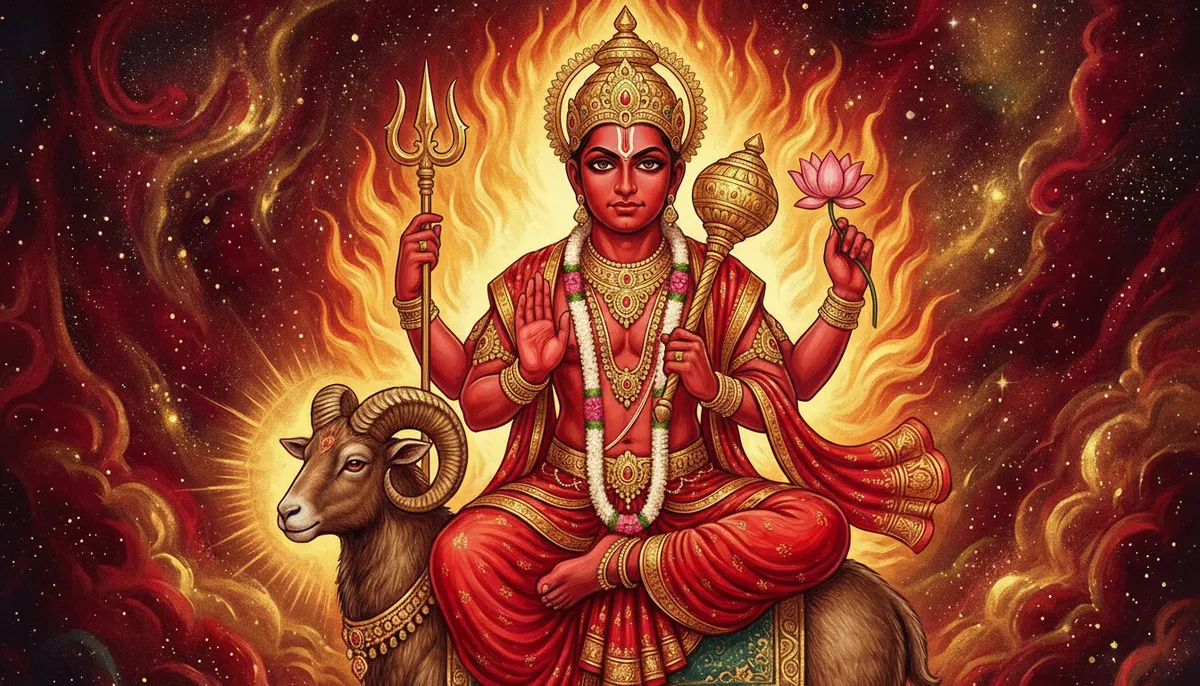
In the vast architecture of Jyotisha, Mars rises like a flame against the dark sky—fierce, unrelenting, and alive with the pulse of action.
Summary Table
| Attribute | Description |
|---|---|
| Sanskrit Names | Mangala, Kuja, Kruradrik, Bhumisuta, Ara, Rakta, Vakra |
| Nature | Natural Malefic |
| Gender | Male |
| Element | Fire (Agni) |
| Guna | Tamasic |
| Dosha | Pitta (Heat/Bile) |
| Caste | Kshatriya (Warrior-Royal) |
| Cabinet Role | Army Chief |
| Karaka (Signifier) | Strength |
| Deity | Kartikeya (Skanda / Subrahmanya) |
| Color | Blood Red |
| Taste | Bitter |
| Direction | South |
| Season | Grishma (Summer) |
| Time Unit | Ahoratra (Day and Night / 24 hours) |
| Abode | Places of Fire (kitchens, factories, forges) |
| Substance | Gold |
| Apparel | Burnt cloth; Red silken robes |
| Classification | Dhatu (Metals/Minerals) |
| Associated Tree | Bitter trees (such as lemon plants) |
| Exaltation | Capricorn (28°) |
| Moolatrikona | Aries (0°–12°) |
| Own Sign | Aries (12°–30°) |
| Friends | Sun, Moon, Jupiter |
| Enemies | Mercury |
| Neutrals | Venus, Saturn |
Astronomical Overview
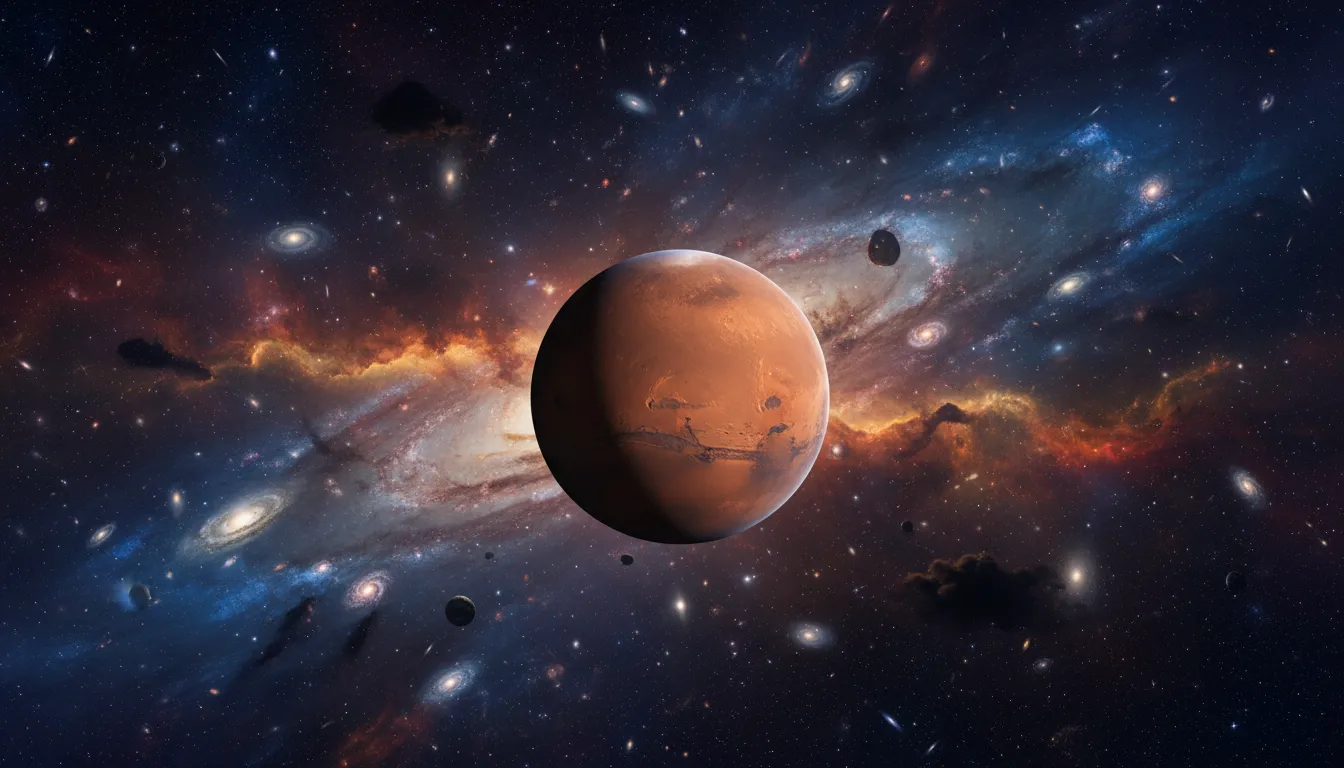
Mars, the fourth planet from the Sun, orbits at an average distance of approximately 228 million kilometers. Its orbital period around the Sun spans roughly 687 Earth days—nearly two years to complete one full circle through the zodiac. Known for its distinctive reddish hue, caused by iron oxide (rust) on its surface, Mars has captivated human imagination since ancient times. With a diameter of about 6,779 kilometers, it is roughly half the size of Earth. Two small moons, Phobos and Deimos, accompany this crimson wanderer on its celestial journey.
In the night sky, Mars appears to move with particular intensity, sometimes appearing to reverse direction in retrograde motion—a phenomenon that earned it the Sanskrit name Vakra (the crooked or curved one). Its brightness fluctuates dramatically depending on its proximity to Earth, at times rivaling Jupiter in luminosity.
Mythological Origins: The Son of Earth
The mythology of Mars unfolds through two distinct traditions, each revealing different aspects of the planet’s essential nature. Both agree on one fundamental point: Mangala is Bhumiputra—the Son of Earth—a deity whose power emerges from the ground itself.
The Vaishnava Tradition: Born from Varaha’s Tusks
In the Vaishnava narrative, Mangala’s birth is connected to one of Vishnu’s most dramatic avatars. When the demon Hiranyaksha dragged the Earth (Bhumi) into the cosmic waters, Vishnu took the form of Varaha—the mighty boar—and descended to rescue her. In the fierce battle that followed, Varaha’s tusks pierced deep into the Earth as he lifted her from the primordial depths.
This union of divine force and earthly substance produced a remarkable offspring. Bhumi, infused with Vishnu’s essence through this cosmic rescue, gave birth to a son with a reddish complexion and warrior spirit—Mangala, also called Bhauma (son of Bhumi) and Kuja (born from Earth). This origin explains Mars’s association with land, property, and territorial matters: he is literally the child of the Earth herself.
The Shaiva Tradition: Born from Shiva’s Sweat
The Shaiva tradition offers a different but equally compelling origin. Once, when Lord Shiva was engrossed in profound meditation on Mount Kailash, three drops of perspiration fell from his forehead onto the Earth below. From these fiery drops arose a beautiful infant with a reddish complexion and four arms, radiating the intensity of his divine father’s tapas.
Shiva entrusted this child to Mother Earth for upbringing, and she raised him with all the nurturing power of the material world. Named Bhauma for his foster mother, this child grew to embody the fierce, focused energy of both his fathers—the cosmic heat of Shiva’s meditation and the grounded strength of Earth’s embrace. This story explains Mars’s dual nature: celestial fire contained within earthly form.
Kartikeya: The Divine Commander
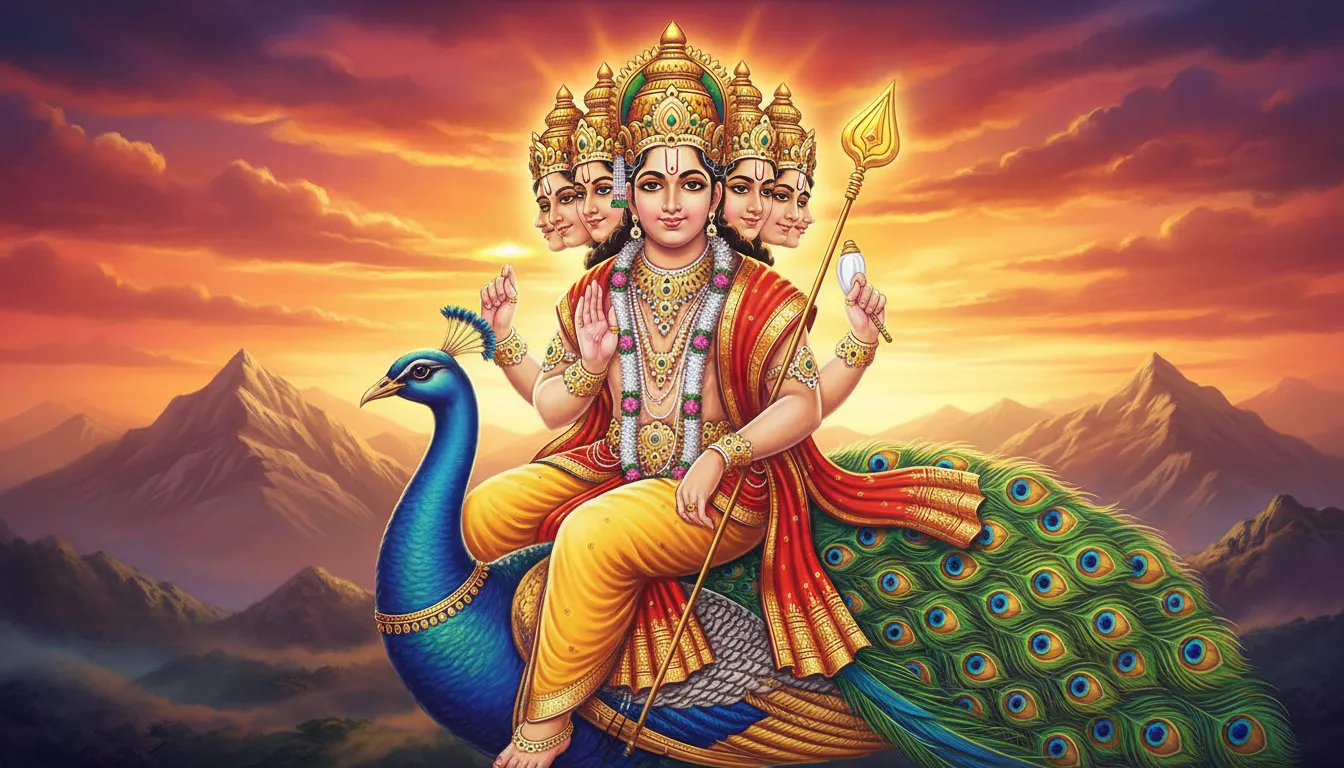
While Mangala is the planetary deity, his ruling god is Kartikeya—also known as Skanda, Murugan, and Subrahmanya—the divine commander of the celestial armies. Kartikeya was born from Lord Shiva’s fire-seed, carried by Agni and the Ganges, and nursed by the six Krittikas (the Pleiades stars), giving him six faces and his name “Karttikeya.”
The connection between Mars and Kartikeya runs deep. Both are warriors, both are associated with fire and the color red, both embody the Kshatriya dharma of protection and righteous battle. Kartikeya’s most famous deed—slaying the demon Taraka who had terrorized the gods—represents the highest expression of Martian energy: overwhelming force deployed in service of dharma.
In South India, Mars worship often takes the form of Murugan devotion. The Vel (divine spear) that Kartikeya carries symbolizes the penetrating focus and decisive action that Mars bestows when well-placed in a chart. Those afflicted by Mars are traditionally advised to worship Kartikeya, seeking to transform destructive impulse into protective power.
Lord of the Sama Veda
A lesser-known but profound association connects Mars to the Sama Veda—the Veda of sacred chanting and melody. In the Brihat Parashara Hora Shastra, Mars is identified as the lord of Sama Veda, the setting of Vedic mantras to consciousness-altering chants. In the Bhagavad Gita, Krishna declares, “Among the Vedas, I am the Sama Veda”—a statement that elevates this tradition to the highest spiritual significance.
This connection suggests a deeper dimension to Mars beyond mere physical aggression: the disciplined application of energy toward liberation, the focused will that transforms consciousness. The warrior’s path, in its highest expression, leads not to conquest but to moksha.
Classical Description
The classical texts paint Mars in vivid, unmistakable strokes. According to the foundational teachings found in Brihat Parashara Hora Shastra and Saravali, Mars possesses a form that mirrors his fiery essence: a physique that is strong yet lean, with a thin waist and compact frame. His stature is described as short rather than tall, and his body radiates intensity like burning fire itself.
His eyes carry a reddish-brown tint (Pingala)—sometimes described as blood-red—lending him the epithet Kruradrik, meaning “cruel-eyed” or “fierce-glanced.” His hair is short and lustrous, shining with an inner heat. The marrow in his bones and the density of his flesh speak to a constitution built for endurance and combat.
Mars rules over places where fire dwells: the kitchen, the forge, the factory, and any space where transformation through heat occurs.
Essential Qualities
Element: Fire (Agni)
Mars is pure Agni—the transformative flame that consumes, purifies, and propels. Fire moves upward; so does the Martian impulse, seeking action, conquest, and expression.
Guna: Tamasic
Despite his fiery nature, Mars carries a Tamasic quality in temperament—prone to impulsiveness, short-temper, and at times, clouded judgment. This is the shadow side of his warrior spirit: force without reflection.
Dosha: Pitta
Mars governs Pitta, the humor of heat and metabolism. Those under his strong influence may experience inflammatory conditions, excess heat in the body, and a constitution that runs warm.
Caste: Kshatriya
As a warrior-class planet, Mars embodies the Kshatriya dharma—protection, combat, leadership in battle, and the courage to defend what is sacred.
Physical, Emotional, and Psychological Traits
Physical Characteristics
The classical texts describe Mars-influenced individuals as possessing:
- A strong, compact body with a lean, athletic build
- A thin waist and defined physique
- Eyes with a reddish or reddish-brown tint
- Short, bright hair that carries a natural sheen
- A complexion with a reddish tone, as if touched by fire
- An overall appearance that radiates intensity and alertness
Emotional and Psychological Nature
Mars bestows a temperament that is:
- Unsteady: Restless energy that seeks constant movement
- Adventurous: Drawn to challenge, risk, and the unknown
- Wrathful: Quick to anger, though the flame may burn out as swiftly as it ignites
- Courageous: Fearless in the face of opposition
- Skillful in confrontation: Adept at strategy and the art of overcoming obstacles
- Accomplished in speech: Capable of sharp, direct, and commanding communication
- Liberal: Generous, though sometimes recklessly so
- Fickle-minded: Attention shifts rapidly; patience is not his virtue
Symbolism and Mythic Archetypes
The Divine Commander
Mars is the celestial warrior, the divine commander, the son born of Earth herself (Bhumisuta). His presiding deity is Kartikeya—also known as Skanda or Subrahmanya—the youthful god of war who rides a peacock and leads the armies of the devas against forces of darkness. This archetype speaks to the primal energy of assertion: the force that says yes to life, that refuses defeat, that charges forward. Mars is not subtle. He is the general who rallies troops at dawn, the athlete who trains through pain, the reformer who tears down what is corrupt.
The Earth’s Avenger
As Bhumiputra, the Son of Earth, Mars carries a special relationship with the material world. He is the protector of territory, the defender of boundaries, the force that rises from the ground to repel invaders. This symbolism explains Mars’s association with land, property, and real estate—matters of earthly possession and territorial integrity. The red dust of his surface mirrors the red soil of the earth, and his energy is the same as that which drives tectonic plates and volcanic eruptions: the fierce, relentless power of the ground asserting itself.
Blood and Bitterness
His color, blood-red, evokes both life force and violence—the same substance that sustains us can also be spilled. The ancients understood that blood carries prana, the vital energy that Mars governs through his association with strength and physical vitality. His taste, bitter, reminds us that strength often emerges from difficulty, from what is hard to swallow. The bitter herbs that heal often require force of will to consume—medicine that cures by challenging the system.
The Executor
In the cosmic cabinet, Mars holds the position of Senapati—Army Chief or Commander-in-Chief. While the Sun rules as King and Jupiter advises as Minister, Mars executes. He transforms intention into action, vision into reality, plan into result. This executive function explains why Mars governs younger siblings (those who carry out what elders initiate), engineers (who build what architects design), and surgeons (who cut to heal). The executor does not deliberate; he acts.
The Protector of Dharma
Despite his malefic classification, Mars serves a sacred function: the protection of dharma. Just as Kartikeya slew Taraka to liberate the gods, Mars provides the energy needed to defend what is righteous, to fight against injustice, and to maintain boundaries against violation. Without Mars, there would be no immune system to fight disease, no army to repel invasion, no courage to speak truth to power. His violence, rightly directed, is the violence of the surgeon’s scalpel—destructive in service of healing.
Significations (Karakatvas)
Mars governs the following domains and matters:
People and Roles
- Army chiefs and military commanders
- Younger brothers and siblings
- Athletes, surgeons, and engineers
Places and Things
- Forts, battlefields, and places of defense
- Kitchens, factories, and anywhere fire is used
- Land, property, and real estate
Events and Conditions
- Wounds, accidents, and injuries
- Fire-related diseases and inflammatory conditions
- Disputes, conflicts, and acts of courage
Substances and Materials
- Gold and metals
- Coral
- Wheat
Creatures
- Violent or fierce animals
Temporal Rulership
- Tuesday (Mangalvar)
- Ahoratra (day-and-night / 24-hour period)
- Night hours (temporal strength)
- Summer (Grishma)
Nakshatra Rulership
Mars governs three nakshatras, each expressing martial energy through different elemental and zodiacal contexts:
Mrigashira (23°20’ Taurus – 6°40’ Gemini) “The deer’s head”—Mrigashira bridges earthy Taurus and airy Gemini, expressing Mars through the pursuit of experience and the hunt for knowledge. Its symbol is a deer’s head, representing the eternal search, the restless curiosity that drives exploration. The presiding deity is Soma, the Moon-god, creating an interesting tension between lunar receptivity and Martian drive.
Mrigashira natives often possess remarkable charm combined with an insatiable curiosity. They are the seekers, the researchers, the travelers who cannot stay still. The deer is both hunter and hunted—those with strong Mrigashira placements may find themselves pursuing desires while also being pursued, caught in the eternal chase of attraction and experience. This nakshatra channels Mars’s energy into mental exploration and creative pursuit rather than physical combat.
Chitra (23°20’ Virgo – 6°40’ Libra) “The brilliant” or “the jewel”—Chitra spans practical Virgo and aesthetic Libra, expressing Mars through creative excellence and architectural vision. Its symbol is a bright jewel or pearl, representing the beauty that emerges from skillful work. The presiding deity is Tvashtar (Vishvakarma), the celestial architect who fashioned the weapons of the gods.
This connection is profound: just as Tvashtar crafted divine instruments of power, Chitra natives possess the ability to create beauty through precision and skill. They are the architects, designers, artists, and engineers who transform raw materials into works of lasting value. Mars’s energy here becomes the chisel that carves the sculpture, the focused will that manifests vision into form. Chitra individuals often possess striking physical appearance and an instinctive eye for aesthetics.
Dhanishta (23°20’ Capricorn – 6°40’ Aquarius) “The wealthiest” or “the most famous”—Dhanishta spans ambitious Capricorn and humanitarian Aquarius, expressing Mars through rhythm, prosperity, and group leadership. Its symbol is a drum or flute, representing the beat that unifies and the music that inspires collective action. The presiding deities are the eight Vasus, elemental gods who embody material abundance.
Dhanishta channels Martian energy into the achievement of tangible success and the leadership of groups. The drum symbolizes both martial rhythm (the beat of armies) and celebratory music (the sound of victory). Those with strong Dhanishta placements often excel in fields requiring both ambition and teamwork—business, music, sports, and organizational leadership. They possess natural magnetism and the ability to inspire others toward collective achievement.
Common Thread: All three Mars-ruled nakshatras share themes of pursuit, creation, and achievement—yet each expresses these through different modalities. Mrigashira pursues through curiosity and exploration, Chitra through creative craftsmanship, and Dhanishta through ambitious leadership. Together, they trace the arc of Martian energy from restless seeking through skilled creation to material success.
Strengths and Weaknesses
Strengths
- Directional Strength: Mars gains power in the South
- Temporal Strength: Most potent during the night
- Natural Valor: Provides courage, initiative, and the capacity for decisive action
- Protective Force: Defends boundaries—physical, emotional, and territorial
- Executive Power: Excels at implementation, turning vision into reality
Weaknesses
- Impulsiveness: Acts before thinking; regret may follow
- Anger: The flame that warms can also burn; Mars tends toward wrath
- Restlessness: Difficulty with patience, sustained focus, and waiting
- Harshness: Communication and action may lack gentleness
Planetary Relationships
| Relationship | Planets |
|---|---|
| Friends | Sun, Moon, Jupiter |
| Enemies | Mercury |
| Neutrals | Venus, Saturn |
Special Aspects
Mars casts full drishti (planetary glance) on the 4th, 7th, and 8th houses from his position. While all planets aspect the 7th house, Mars uniquely extends his gaze to the 4th and 8th—influencing matters of home and security (4th) as well as transformation, hidden matters, and longevity (8th). These special aspects carry the full force of his martial energy.
Dignities
| Dignity | Sign and Degree |
|---|---|
| Exaltation | Capricorn (28°) |
| Moolatrikona | Aries (0°–12°) |
| Own Sign | Aries (12°–30°) |
In Capricorn, Mars reaches his highest expression—disciplined ambition, strategic power, and focused will. In Aries, his own domain, he is most himself: raw, direct, and untamed.
Closing Reflection
Mars is the fire that forges and the blade that cuts. He is neither gentle nor patient, yet without him, nothing would be built, defended, or transformed. In the cosmic order, he serves as the executor—the one who acts when action is required, who moves when movement is demanded.
The myths of Mars illuminate our own martial nature. Like Mangala born from Shiva’s fiery sweat, we carry within us an energy that emerged from intensity and was nurtured by the material world. Like the son of Earth raised to protect her, we are called to defend the ground we stand on—our values, our loved ones, our territory of being. And like Kartikeya wielding his Vel against the demon Taraka, we may find that our greatest battles are fought in service of liberation, not conquest.
To understand Mars in your chart is to understand where your courage lies, where your anger may flare, and where your executive power can transform intention into reality. It marks the battlefield of your existence—sometimes a place of conflict, sometimes a forge of transformation, but always demanding that you show up, take action, and fight for what matters.
In the crimson glow of Mangala, we find not cruelty, but conviction—the unwavering flame that refuses to be extinguished.
Classical Reference Notes
The portrait of Mangala presented here synthesizes descriptions from the Brihat Parashara Hora Shastra, the Saravali, and the Phaladeepika—the three foundational pillars of classical Jyotisha. All sources agree on Mars’s fundamental characteristics: malefic nature, Pitta constitution, warrior caste, fiery element, and role as Army Chief in the cosmic cabinet.
Brihat Parashara Hora Shastra
Parashara describes Mars as blood-red in complexion, fickle-minded, liberal, bilious (Pitta constitution), prone to anger, with a thin waist and physique. Associates him with fire abodes and bitter taste. BPHS specifically identifies Mars as lord of the Sama Veda and details his special aspects to the 4th and 8th houses. The text notes his exaltation at 28° Capricorn and his Moolatrikona in Aries 0°–12°.
Saravali
Kalyana Varma elaborates on Mars as short in stature with reddish-brown eyes (Pingala), strong body, short shining hair, bright as burning fire. Notes his tamasic guna, warrior caste, and temperament of unsteadiness, adventure, wrath, and courage. Identifies his abode as fire houses such as kitchens and factories. Saravali provides extensive detail on the physical and temperamental characteristics that distinguish Mars-dominant individuals.
Phaladeepika
Mantreswara’s Phaladeepika confirms the essential Martian attributes while providing additional predictive context. It notes Mars’s significance as karaka for brothers (especially younger siblings), courage, and landed property. The text elaborates on the effects of Martian placement in various houses and signs, and provides guidance on the results of Mars’s special aspects to the 4th, 7th, and 8th houses.
Consistency Across Texts
The major texts agree remarkably on Mars’s characteristics: blood-red color, bitter taste, Pitta dosha, tamasic guna (though some classify him as rajasic-tamasic), Kshatriya caste, and associations with fire, metals, and warfare. His exaltation in Capricorn and rulership of Aries and Scorpio appear consistently across all traditions. The connection to Kartikeya as presiding deity is universally acknowledged.
Explore the Navagraha
This article is part of our comprehensive series on the nine celestial powers of Vedic astrology. Discover how all the grahas work together in the cosmic parliament:
The Complete Guide to Navagraha: Nine Planets of Vedic Astrology →
References
This article synthesizes knowledge from the following classical Vedic astrology texts:
-
Brihat Parashara Hora Shastra - The foundational text of Vedic astrology attributed to Sage Parashara, detailing planetary characteristics, significations, and interpretive principles.
-
Saravali - A comprehensive classical text by Kalyana Varma, providing detailed descriptions of planetary qualities, physical appearances, and astrological effects.
-
Phaladeepika - A classical text by Mantreswara offering insights into planetary dignities, strengths, and predictive techniques.
These ancient texts form the bedrock of Vedic astrological wisdom, passed down through generations of practitioners and scholars.
Want to discover how Mars influences your personal birth chart? Join our waitlist for personalized Vedic astrology insights when Lopamudra launches.
Related Articles
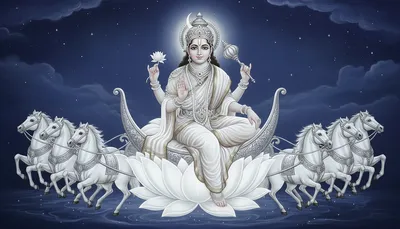
The Moon (Chandra): Sovereign of the Mind, Keeper of the Tides
In the ancient sky-map of Jyotisha, Chandra rises as the luminous reflection of the soul - the mind's mirror, ever waxing and waning with the pulse of creation.
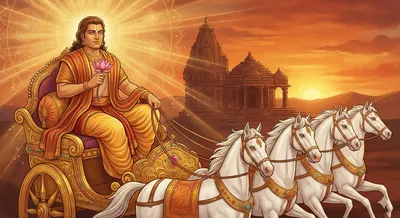
Surya: The Radiant Soul of the Cosmos
In the celestial parliament of the Navagrahas, the Sun reigns as sovereign—a cosmic monarch whose very presence illuminates both heaven and earth, embodying the eternal principle of consciousness itself.
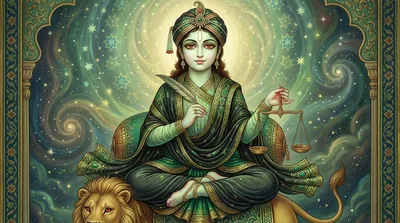
Budha: The Awakened Messenger, Prince of Intellect and Speech
Born of cosmic scandal yet blessed with divine wit—Mercury stands as the chameleon among planets, a neutral prince whose nature mirrors those who surround him, awakening the mind to language, logic, and the mercurial dance of thought.