What is Vedic Astrology? The Complete Beginner's Guide to Jyotish
Discover Vedic astrology (Jyotish), the ancient Hindu science of light. Learn the core components of this 5,000-year-old system—planets, signs, houses, nakshatras, and the powerful Dasha timing system that makes precise predictions possible.

Vedic astrology—known as Jyotish in Sanskrit—is one of humanity’s oldest and most sophisticated systems for understanding life’s patterns. For over five millennia, this “science of light” has guided millions through life’s pivotal decisions: when to marry, when to start ventures, how to understand one’s purpose.
But what exactly is Vedic astrology? What makes it capable of such precise timing predictions? And why does a system developed thousands of years ago remain remarkably relevant today?
This guide will take you from curious beginner to informed student, covering everything from the philosophical foundations to the practical components you’ll encounter in your first Vedic birth chart.
The Meaning of Jyotish: Science of Light
The word Jyotish (Sanskrit: ज्योतिष, jyotiṣa) derives from jyoti, meaning “light”—the light of the Sun, the Moon, or any heavenly body. As the Sanskrit scholar Monier-Williams noted, Jyotisha encompasses not just astrology but also astronomy and the science of timekeeping through celestial movements.
The term reveals something profound about the Vedic worldview. Light doesn’t just illuminate; it reveals. The planets don’t cause your destiny any more than a weather forecast causes rain. They reveal patterns already in motion, making the invisible visible.
Jyotish is one of the six Vedangas—the auxiliary disciplines connected with the study of the Vedas. It is often called the “eye of the Vedas” (Vedachakshu), the limb of sacred knowledge that allows us to see what would otherwise remain hidden: the timing of events, the nature of challenges, the windows of opportunity.
Origins: From Ritual Timing to Life Guidance
Vedic astrology emerged from the same civilization that produced yoga, Ayurveda, and meditation—practices now embraced worldwide. Its origins trace to the Vedas, the oldest Sanskrit texts, with oral traditions stretching back millennia.
The Vedanga Jyotisha
The earliest systematic text is the Vedanga Jyotisha, which exists in two recensions: one linked to the Rigveda (36 verses) and another to the Yajurveda (43 verses). Early Jyotisha focused on preparing calendars and determining auspicious dates for Vedic rituals and sacrifices—practical timekeeping rather than personal prediction.
The Rigveda mentions Svarbhanu, an eclipse-causing demon, while the Atharvaveda and Chandogya Upanishad reference Rahu, the shadow entity believed responsible for eclipses. These early references laid groundwork for the elaborate planetary mythology that would develop.
The Classical Texts
Over centuries, Jyotisha evolved from ritual astronomy into the sophisticated predictive system we know today. The main classical texts include:
- Brihat Parashara Hora Shastra — The foundational text for natal astrology, attributed to sage Parashara. This composite work of 71 chapters dates to the 7th-8th centuries CE.
- Saravali by Kalyanavarma (circa 800 CE) — A comprehensive manual on chart interpretation
- Brihat Samhita by Varahamihira (6th century) — An encyclopedic synthesis of multiple astronomical and astrological schools
- Phaladeepika by Mantreswara — A practical manual still widely studied today
- Jaimini Sutras — An alternative system emphasizing sign-based analysis and character significators
The Pañcasiddhāntikā of Varahamihira summarizes five astronomical schools known in the 6th century, preserving calculation methods that might otherwise have been lost.
Unlike many ancient knowledge systems that fractured or disappeared, Jyotish maintained an unbroken lineage of teacher-to-student transmission. The texts we study today connect directly to observations refined over thousands of years.
The Three Branches of Jyotish
Classical Jyotish comprises three major divisions, each serving a distinct purpose:
Siddhanta: The Astronomical Foundation
Siddhanta (Sanskrit: “established conclusion”) is the mathematical and astronomical foundation—the science of calculating planetary positions. The ancient Siddhantas provided algorithms for computing celestial positions using only pen, paper, and trigonometric tables.
How Traditional Calculations Worked
The Surya Siddhanta and other classical texts describe a sophisticated system:
- Mean Positions — Calculate where a planet would be if it moved at constant speed along a circular orbit
- Equations of Center — Apply corrections for the elliptical nature of orbits (though expressed geometrically, not as ellipses)
- Epicyclic Corrections — Model the apparent loops planets make as seen from Earth
- Sine Tables — Use pre-computed trigonometric values for angular calculations
The texts define cosmic cycles spanning millions of years (the famous 4.32 billion year kalpa), providing a mathematical framework for calculating positions at any point in time.
Regional Calculation Tables
In practice, most astrologers didn’t perform full Siddhanta calculations for every chart. Instead, they used pre-computed regional tables showing daily planetary positions:
- Sarini (North India) — Table texts like the famous Makaranda Sarini (1478 CE, Varanasi) provided structured calculation tables following Saurapaksha methods
- Vakya (South India) — Systems like Vakya Panchangam encoded calculations in memorizable verses (vakyas), used in Tamil Nadu’s Pambu Panchangam and Sri Rangam Panchangam
Both systems were:
- Computed by mathematical specialists using Siddhanta methods
- Passed from teacher to student within lineages
- Periodically corrected through Bija Samskara (seed corrections) when observable drift was noticed
The Sun and Moon received the most attention for corrections—their positions could be verified against daily observations and eclipse timing. Other planets, harder to observe precisely with the naked eye, relied more on inherited table accuracy.
This practical system meant the prediction rules (slokas) and the calculation methods evolved together, tested against each other over generations. The system was internally calibrated—the interpretive tradition developed alongside specific calculation methods.
Modern Calculations and Ayanamsa
Today, most Vedic astrologers use modern astronomical ephemerides (like the Swiss Ephemeris) for planetary positions—the same data used by NASA and observatories worldwide. These provide precision far beyond traditional tables.
However, a critical question arises: how do you convert these tropical (season-based) positions to the sidereal zodiac Vedic astrology requires? This is where Ayanamsa comes in.
Ayanamsa (Sanskrit: “movement of the solstices”) is the angular difference between the tropical and sidereal zodiacs—currently about 24 degrees and increasing by roughly 50 arc-seconds per year due to precession. Different ayanamsa values exist:
- Lahiri (Chitrapaksha) — Most widely used, official Indian government standard
- Krishnamurti — Used in KP (Krishnamurti Paddhati) system
- Raman — Proposed by B.V. Raman
- True Chitrapaksha — Places the star Spica exactly at 0° Libra
The choice of ayanamsa affects all planetary positions by a degree or two, which can shift planets into different signs or nakshatras. This remains an area of ongoing discussion among practitioners.
Hora: Natal Astrology
Hora (from ahoratra, meaning “day and night”) is the branch most people associate with astrology—the interpretation of birth charts. Hora encompasses:
- Jataka — Birth chart analysis (personality, life patterns, timing)
- Muhurta — Electional astrology (selecting auspicious times for important actions)
- Prashna — Horary astrology (answering specific questions based on the moment asked)
- Compatibility — Relationship matching, especially for marriage
The foundational text for Hora is the Brihat Parashara Hora Shastra, though practitioners also draw on Jaimini’s sign-based methods and regional traditions.
Samhita: Mundane Astrology
Samhita (Sanskrit: “compilation”) deals with collective and worldly affairs rather than individual charts:
- Weather patterns and agricultural forecasting
- Political events and the fate of nations
- Natural phenomena (earthquakes, eclipses, comets)
- Omens and portents
- Architecture and spatial arrangement (related to Vastu Shastra)
Varahamihira’s Brihat Samhita is the encyclopedic reference for this branch, covering everything from gemology to temple architecture to predicting rainfall.
How Jyotish Is Used
From this three-branch foundation, several practical applications emerge:
Reading the Birth Chart (Jataka)
The most common use: analyzing the natal horoscope to understand personality, life themes, timing of events, and karmic patterns. This is what most people mean when they say “Vedic astrology reading.”
Muhurta: Electional Timing
Selecting auspicious moments for important actions—starting a business, getting married, moving into a new home, beginning a journey. Muhurta analysis relies heavily on the Panchanga, the five limbs of Vedic timekeeping:
| Element | Sanskrit | Meaning |
|---|---|---|
| Tithi | तिथि | Lunar day (30 per lunar month) |
| Vara | वार | Weekday (each ruled by a planet) |
| Nakshatra | नक्षत्र | Lunar mansion the Moon occupies |
| Yoga | योग | Sun-Moon angular relationship (27 yogas) |
| Karana | करण | Half of a tithi (60 per lunar month) |
The Panchanga forms the foundation of the Hindu calendar and determines religious observances, festivals, and auspicious timing. A skilled Muhurta practitioner weighs all five elements alongside planetary positions to identify optimal windows for action.
Marriage Compatibility (Kundali Milan)
A sophisticated matching system comparing two birth charts, traditionally using Ashtakoot (eight-factor) matching. Beyond the points-based system, deeper analysis examines the 7th house, Venus, Jupiter, and the overall compatibility of planetary periods.
Prashna Shastra: Answering Questions
Horary astrology—casting a chart for the moment a question is asked. The querent need not have an accurate birth time; the question itself creates the chart. Prashna is particularly useful for specific, time-sensitive questions where natal analysis is impractical.
The Core Philosophy: Karma
To understand Vedic astrology, you must first understand its philosophical foundation.
Karma: The Three Layers
Karma is often mistranslated as “fate” or confused with punishment. In the Vedic framework, karma simply means “action”—and every action creates consequences that unfold across time. The tradition recognizes three distinct layers:
- Sanchita Karma — The total accumulated karma from all past lives. This is the vast storehouse of unresolved actions, too large to experience in a single lifetime.
- Prarabdha Karma — The portion of Sanchita allocated for this life. This is what your birth chart maps. It is fixed at birth and must be experienced.
- Kriyamana Karma — The karma you create now through present actions. This adds to Sanchita and shapes future lives.
Your birth chart reveals Prarabdha—the karma “ripe for fruition” in this incarnation. Jyotisha reasons out destiny in terms of karma phala (fruits of action), showing when these seeds will sprout. As the classical definition states: Jyotish is karma-phala-vipāka-kāla-vidhānam—“the system for timing the fruition of past actions.”
Runanu Bandha: The Bonds of Karma
A profound dimension of karma is Runanu Bandha—the karmic debts and bonds that connect us to specific people across lifetimes. “Runa” means debt; “Bandha” means bondage. We are born into relationships to repay or receive what is owed.
The birth chart reveals these karmic relationships through specific house and planetary significations:
| Relationship | House | Karaka (Significator) |
|---|---|---|
| Father | 9th | Sun |
| Mother | 4th | Moon |
| Siblings | 3rd | Mars |
| Children | 5th | Jupiter |
| Spouse | 7th | Venus |
| Teachers/Gurus | 9th | Jupiter |
| Servants/Employees | 6th | Saturn |
The condition of these houses and planets reveals the nature of karmic bonds—whether supportive, challenging, or transformative. Difficult placements don’t indicate “bad” relationships but rather intense karmic work to be completed.
Karma as Terrain, Not Destination
Here’s a crucial distinction that transforms how you relate to your chart:
Prarabdha karma sets the terrain. Free will chooses the path.
Your birth chart reveals the general landscape of this life—the mountains, valleys, rivers, and plains you’ll encounter. This terrain is your Prarabdha, the karma allocated for this incarnation. But contrary to what some fear, it’s not a rigid script with every step predetermined.
Within that terrain, you decide which path to take. The paved road or the forest trail. Prepared with supplies or stumbling unprepared. Traveling by day or navigating by stars. Same landscape, vastly different journeys.
This is why Vedic astrology includes remedies—not to delete karma or escape the terrain, but to prepare you for it. Remedies are tools for skillful navigation: knowing when to rest, where to find shelter, how to read the signs along the way.
Why Vedic Astrology Can Predict
Many divination systems offer insight into the present moment. Vedic astrology can map the future—not because it’s magic, but because it reads patterns of causation already in motion.
If you throw a ball, physics can predict where it will land. The trajectory is set the moment it leaves your hand. Similarly, karma creates trajectories. The Dasha system (planetary periods) reveals when accumulated karma will ripen into experience.
This is why Vedic astrology excels at timing—it’s tracking the unfolding of what has already been set in motion.
The Sidereal Zodiac: Tracking the Stars
Vedic astrology uses the sidereal zodiac, which tracks the actual positions of constellations in the sky. When the Sun is astronomically in the constellation Aries, your Vedic chart shows Aries.
This differs from systems that fix the zodiac to the seasons rather than the stars. Due to the precession of equinoxes—a 26,000-year wobble in Earth’s axis—your Vedic planetary positions may differ from what you’d find elsewhere by approximately 24 degrees.
The sidereal approach keeps Vedic astrology aligned with observable astronomical reality, which traditional practitioners consider essential for accurate predictions.
For a detailed comparison of astrological systems, see our upcoming guide: Vedic Astrology vs. Western Astrology.
The Dasha System: Vedic Astrology’s Timing Engine
One of Vedic astrology’s most powerful and distinctive features is the Dasha system—planetary periods that unfold in a fixed sequence throughout your life.
The most common system, Vimshottari Dasha, spans 120 years across all nine planets:
| Planet | Period Length |
|---|---|
| Sun (Surya) | 6 years |
| Moon (Chandra) | 10 years |
| Mars (Mangala) | 7 years |
| Rahu | 18 years |
| Jupiter (Guru) | 16 years |
| Saturn (Shani) | 19 years |
| Mercury (Budha) | 17 years |
| Ketu | 7 years |
| Venus (Shukra) | 20 years |
Your birth nakshatra (lunar mansion) determines which planet’s period you’re born into, and the sequence unfolds from there. Each major period (Mahadasha) subdivides into sub-periods (Antardashas), which further subdivide—allowing predictions down to the month or even week.
This is what makes Vedic astrology exceptional at timing. Rather than just describing personality, it maps when different life themes will activate.
The Components of a Vedic Birth Chart
A Vedic birth chart (Kundali or Janma Patri) maps the positions of celestial bodies at your exact birth moment. Understanding its components is essential.
The Trinity: Lagna, Moon, and Sun
Before examining individual planets, understand the three pillars that define a person in Vedic astrology:
| Component | Sanskrit | Represents | Signifies |
|---|---|---|---|
| Ascendant | Lagna | Physical Body | Constitution, appearance, vitality, how you engage with the world |
| Moon | Chandra | Mind | Emotions, thoughts, reactions, psychological patterns, mental constitution |
| Sun | Surya | Soul | Core identity, life purpose, will, consciousness, spiritual essence |
These three form the foundation of chart analysis. The Lagna shows how you appear and act; the Moon shows how you feel and think; the Sun shows who you are at the deepest level.
In traditional practice, the Moon sign (Rashi) often takes precedence over the Sun sign for predictions—the mind’s patterns are more accessible to observation and influence than the soul’s essence. The Lagna, changing every two hours, personalizes the chart to the exact moment and location of birth.
The 9 Planets (Navagrahas)
Vedic astrology uses nine celestial bodies called grahas. The Sanskrit word graha means “that which grasps, seizes, or eclipses”—referring to forces that capture the mind and influence human affairs. When a graha is active (particularly during its Dasha period), it is said to powerfully direct a person’s thoughts, decisions, and experiences.
The Luminaries:
- Surya (Sun) — Soul, vitality, authority, father, government
- Chandra (Moon) — Mind, emotions, mother, nurturing, public
The Inner Planets:
- Mangala (Mars) — Energy, courage, siblings, property, conflict
- Budha (Mercury) — Intellect, communication, commerce, adaptability
The Outer Planets:
- Guru/Brihaspati (Jupiter) — Wisdom, expansion, teachers, fortune, children
- Shukra (Venus) — Love, beauty, arts, luxury, marriage, vehicles
- Shani (Saturn) — Discipline, delays, karma, longevity, service
The Shadow Planets (Lunar Nodes):
- Rahu (North Node) — Ambition, obsession, foreign elements, worldly desires
- Ketu (South Node) — Spirituality, detachment, past lives, liberation
Rahu and Ketu are mathematical points where the Moon’s orbit crosses the ecliptic—the path of the Sun. Classically depicted as the head and tail of a serpent-demon, they are called “shadow planets” (chaya grahas) because they are invisible yet cause eclipses. They move in perpetual retrograde motion, always exactly 180° apart, with an orbital cycle of approximately 18 years.
Each planet carries multiple significations that manifest differently depending on house placement, sign, and aspects.
The 12 Signs (Rashis)
The twelve signs of the Vedic zodiac have both Sanskrit and English names:
| Sanskrit | English | Element | Quality | Ruler |
|---|---|---|---|---|
| Mesha | Aries | Fire | Movable | Mars |
| Vrishabha | Taurus | Earth | Fixed | Venus |
| Mithuna | Gemini | Air | Dual | Mercury |
| Karka | Cancer | Water | Movable | Moon |
| Simha | Leo | Fire | Fixed | Sun |
| Kanya | Virgo | Earth | Dual | Mercury |
| Tula | Libra | Air | Movable | Venus |
| Vrishchika | Scorpio | Water | Fixed | Mars |
| Dhanu | Sagittarius | Fire | Dual | Jupiter |
| Makara | Capricorn | Earth | Movable | Saturn |
| Kumbha | Aquarius | Air | Fixed | Saturn |
| Meena | Pisces | Water | Dual | Jupiter |
The 12 Houses (Bhavas)
Houses represent life domains. The Ascendant sign becomes the 1st house, and subsequent signs follow:
| House | Sanskrit | Life Domain |
|---|---|---|
| 1st | Lagna | Self, body, personality, beginnings |
| 2nd | Dhana | Wealth, family, speech, food |
| 3rd | Sahaja | Siblings, courage, communication, short travels |
| 4th | Sukha | Home, mother, emotions, vehicles, education |
| 5th | Putra | Children, creativity, intelligence, romance |
| 6th | Shatru | Enemies, disease, service, debts |
| 7th | Kalatra | Marriage, partnerships, business, foreign lands |
| 8th | Ayur | Longevity, transformation, inheritance, occult |
| 9th | Dharma | Fortune, father, higher learning, spirituality |
| 10th | Karma | Career, status, authority, public life |
| 11th | Labha | Gains, aspirations, elder siblings, networks |
| 12th | Vyaya | Loss, isolation, spirituality, foreign residence |
The houses also map to the four Purusharthas (aims of life), revealing the deeper purpose each house serves:
| Purushartha | Houses | Meaning |
|---|---|---|
| Dharma (Purpose) | 1st, 5th, 9th | The need to find a path and meaning |
| Artha (Resources) | 2nd, 6th, 10th | The need to acquire resources for that path |
| Kama (Desire) | 3rd, 7th, 11th | The need for pleasure and connection |
| Moksha (Liberation) | 4th, 8th, 12th | The need for inner peace and transcendence |
This pattern repeats three times through the twelve houses: first at the individual level (houses 1-4), then in relationship to others (houses 5-8), and finally at the universal level (houses 9-12).
The 27 Nakshatras
Beyond the 12 signs, Vedic astrology divides the zodiac into 27 Nakshatras (lunar mansions)—each spanning 13°20’ and identified by its prominent star or star cluster. Historical texts sometimes enumerate 28 nakshatras, including Abhijit, though modern practice uses the 27-nakshatra system.
Each nakshatra is further divided into four padas (quarters) of 3°20’ each. These padas add another layer of precision—your nakshatra pada influences your Navamsha (D-9) chart, the most important divisional chart for marriage and dharma.
Your birth nakshatra (determined by Moon position) reveals deep psychological traits, determines your Dasha sequence, and is traditionally used for naming children. Two people with Moon in the same sign but different nakshatras will have noticeably different temperaments, motivations, and life patterns.
Additional Interpretive Techniques
Beyond the basic components, Vedic astrology employs several sophisticated analytical tools.
Yogas: Planetary Combinations
Yoga (Sanskrit: “union”) refers to specific planetary combinations that indicate particular life patterns. Hundreds of yogas are catalogued in classical texts:
- Raja Yogas — Combinations for fame, status, and authority, typically formed when lords of angular houses (kendras) combine with lords of trinal houses (trikonas)
- Dhana Yogas — Wealth-producing combinations involving the 2nd and 11th house lords
- Nabhasa Yogas — Configurations based on how planets are distributed across the chart (e.g., all planets in one sign, in adjacent signs, in alternate signs, etc.). These indicate fundamental life patterns and temperament.
- Arishta Yogas — Combinations indicating difficulties, health issues, or obstacles. These are not “curses” but rather karmic challenges that require attention and often drive growth.
- Sanyasa Yogas — Patterns indicating spiritual renunciation
Some planets can form yogas independently. For example, Mars becomes a Yogakaraka (single planet producing Raja Yoga) for Cancer and Leo ascendants because it rules both a kendra and a trikona.
Drishti: Planetary Aspects
Drishti (Sanskrit: “sight”) describes how planets influence other houses and planets by “looking” at them. Unlike symmetrical aspect systems, Vedic aspects are planet-specific:
- All planets aspect the 7th house from their position (180°)
- Mars additionally aspects the 4th and 8th houses
- Jupiter additionally aspects the 5th and 9th houses
- Saturn additionally aspects the 3rd and 10th houses
These aspects are considered at full strength regardless of exact degree—a key difference from orb-based systems.
Gochara: Transits
Gochara (Sanskrit: “transit”) refers to the ongoing movement of planets through the zodiac after birth. While the birth chart is fixed, transiting planets continue to interact with natal positions, triggering events and activating different life themes.
Transit analysis particularly emphasizes the slower-moving planets—Jupiter (12-year cycle), Saturn (29.5-year cycle), and Rahu-Ketu (18-year cycle)—as their transits mark major life chapters.
How to Get Started with Vedic Astrology
Step 1: Gather Your Birth Information
You need three data points with maximum precision:
- Birth Date: Day, month, and year
- Birth Time: As exact as possible (birth certificate, hospital records)
- Birth Location: City and country (for latitude, longitude, and timezone)
Birth time accuracy is crucial. The Ascendant changes signs approximately every two hours, and even sub-divisions within signs (called Navamsha) shift every 13 minutes. A 30-minute error can significantly alter chart interpretation.
Step 2: Generate Your Chart
Professional Vedic astrology software uses the Swiss Ephemeris for planetary calculations—the same data NASA uses for astronomical precision. The software applies the chosen ayanamsha (correction factor for sidereal calculation) to produce accurate positions.
Step 3: Identify the Basics
Start with these foundational elements:
- Your Ascendant (Lagna): What sign is rising? This shapes your personality and life approach.
- Your Moon Sign: Where is the Moon placed? This reveals your emotional nature.
- Your Moon Nakshatra: Which lunar mansion holds your Moon? This indicates your current Dasha lord.
- Planetary Positions: Which planets are in which houses? Note any conjunctions (planets together).
Step 4: Learn Gradually
Vedic astrology rewards patient study. Master the basics before diving into advanced yogas and divisional charts. Suggested sequence:
- Houses and their meanings
- Planets and their significations
- Signs and planetary dignities
- Basic aspects (planetary “sight”)
- Dasha system fundamentals
- Yogas and special combinations
- Divisional charts
- Advanced timing techniques
Why Vedic Astrology Matters Today
In an age of algorithms and data analytics, why study a 5,000-year-old prediction system?
Self-Knowledge That Transcends Trends
Unlike personality tests designed last decade, Vedic astrology draws on millennia of observed human patterns. The archetypes are time-tested across cultures and centuries.
Timing Intelligence
Modern life offers infinite options but little guidance on when to act. The Dasha system provides a framework for understanding life’s seasons—when to push forward, when to consolidate, when to wait.
A Framework for Meaning
Perhaps most valuable: Vedic astrology offers a coherent framework for life’s challenges. Difficulties aren’t random punishments but opportunities for growth within a larger pattern. This perspective transforms suffering into meaning.
Practical Decision Support
From auspicious timing (Muhurta) for important events to compatibility analysis for relationships, Vedic astrology offers practical tools that complement—not replace—rational decision-making.
The Path Forward
Vedic astrology is not fortune-telling. It’s a sophisticated system for understanding the patterns of human experience—a map that reveals terrain without dictating your path.
Your birth chart shows what you brought into this life. What you do with it remains your choice.
The journey from curious beginner to competent student takes time. But even basic chart literacy transforms how you understand yourself and others. The patterns that once seemed random reveal their hidden logic. Life’s timing begins to make sense.
Welcome to Jyotish—the science of light.
Ready to explore your own Vedic birth chart? Lopamudra combines traditional Jyotish wisdom with modern cloud technology, offering professional-grade calculations with the depth serious practitioners expect.
Related Articles
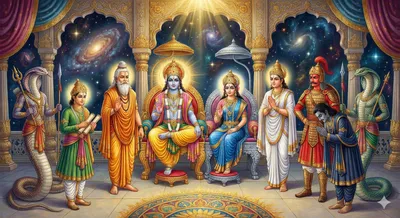
Navagraha: The Nine Celestial Powers That Shape Human Destiny
The complete guide to the Navagraha—nine cosmic forces that govern time, karma, and consciousness in Vedic astrology. From the royal Sun to the liberating Ketu, discover the celestial parliament that influences every aspect of life.
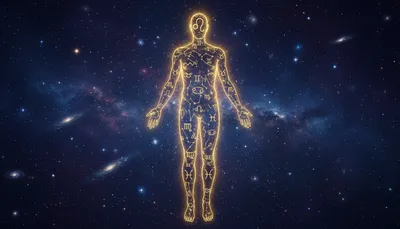
Kalapurusha: The Cosmic Man of Vedic Astrology
Discover Kalapurusha, the cosmic being whose body forms the zodiac. Learn how the 12 signs map to body parts, planets represent vital organs, and how this foundational concept enables medical astrology and chart interpretation.
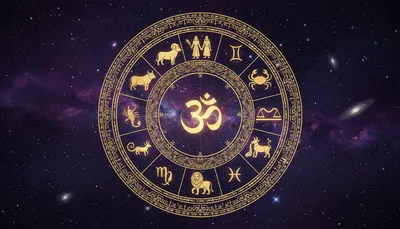
Dwadasha Rashi: Complete Guide to the 12 Zodiac Signs in Vedic Astrology
Discover the 12 rashis of Vedic astrology—from Aries to Pisces. Learn the Kalapurusha body mapping, classification systems, planetary rulerships, and how each zodiac sign shapes destiny according to classical Jyotish texts.