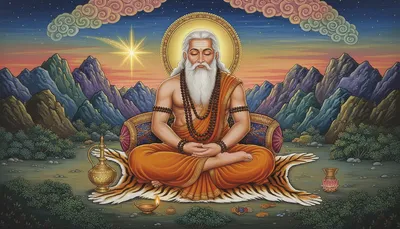
Lopamudra: The Vedic Sage Who Shaped Sacred Tradition
Discover the complete story of Lopamudra—Vedic philosopher, Rigveda hymn composer, Shakta tradition founder, and wife of Sage Agastya. Her wisdom on balancing spiritual pursuit with worldly life resonates across millennia.
Introduction: A Sage Beyond Her Time
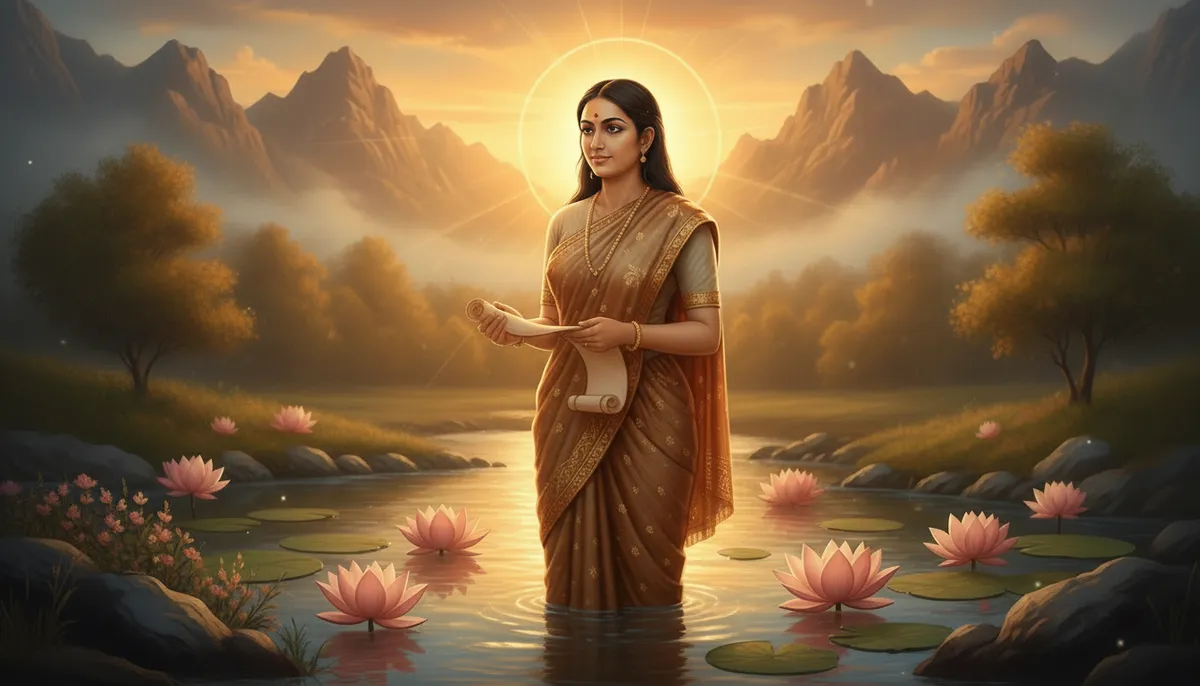
In the constellation of Vedic seers, Lopamudra shines as one of the most remarkable figures—a woman who was simultaneously princess, philosopher, poet, and spiritual pioneer. While history often reduces her to “wife of Agastya,” the ancient texts reveal a far richer portrait: a Brahmavadini (woman devoted to Brahman knowledge) who composed sacred hymns, founded mantra traditions that endure to this day, and articulated a philosophy of life that balances spiritual aspiration with human fulfillment.
Her story spans multiple dimensions of ancient Indian thought. She appears in the Rigveda as a hymn composer, in the Mahabharata as a catalyst for legendary adventures, in Shakta traditions as a mantra seer, and in South Indian folklore as the personification of the sacred Kaveri River. Each tradition preserves different facets of her significance, together forming a portrait of a woman whose wisdom transcended the boundaries of her era.
Etymology: The Meaning Behind the Name
The name “Lopamudra” carries profound meaning rooted in her mythological origin story. In Sanskrit:
- Lopa (लोप) = loss, disappearance
- Mudra (मुद्रा) = seal, mark, distinctive feature, beauty
The name thus signifies “she through whom distinctive beauties were lost” or “the one marked by loss”—a direct reference to the legend of her creation, where the most beautiful features (mudras) of various creatures were gathered, causing those beings to lose (lopa) their distinctive marks.
Some scholars interpret the name philosophically: Lopamudra represents the transcendence of attachment to external beauty, the spiritual insight that recognizes beauty’s impermanence. Her very name becomes a teaching about the nature of form and essence.
Her alternative names reveal different aspects:
- Kaveri (काबेरी) — “She of the saffron waters,” linking her to the sacred river
- Kaushitaki (कौशीतकी) — Associated with the Kaushitaki Brahmana tradition
- Varaprada (वरप्रदा) — “Bestower of boons,” reflecting her spiritual power
The Legend of Her Creation
Unlike ordinary mortals, Lopamudra’s origin story places her outside the normal cycle of birth. According to the Mahabharata’s Aranyaka Parva and various Puranic sources, she was created rather than born—a being assembled from perfection itself.
Agastya’s Vision
Sage Agastya, one of the most powerful rishis of the Vedic age, observed his ancestors (Pitris) suspended in a pit, hanging head downward between worlds. When he inquired about their condition, they revealed a sobering truth: without descendants to perform ancestral rites, they risked falling into lower realms. Agastya, committed to asceticism, had never considered marriage or progeny.
The sage faced a dilemma that would become central to Lopamudra’s story: how to reconcile spiritual practice with worldly duty. His solution was extraordinary—he would create the ideal wife, one who could match his spiritual stature while fulfilling dharmic obligations.
The Assembly of Perfections
Agastya gathered the most graceful attributes from various creatures:
- The eyes of a deer — gentle, deep, and luminous
- The grace of a panther — fluid movement and natural dignity
- The slenderness of palm trees — elegant stature
- The fragrance of champak flowers — natural sweetness
- The softness of swan’s down — tender beauty
From these assembled perfections, he fashioned a being of incomparable beauty and intelligence. The creatures who contributed their finest features experienced “lopa” (loss), while the resulting creation bore these collected “mudras” (marks)—hence, Lopamudra.

Given to the King of Vidarbha
Rather than marry his creation immediately, Agastya placed the infant Lopamudra with the childless King of Vidarbha, who had been performing penance seeking progeny. The king raised her as his own daughter, surrounded by royal luxury and comprehensive education.
This detail proves significant: Lopamudra grew up as a princess, educated in arts and scriptures, accustomed to comfort and refinement. When Agastya later claimed her as wife, she brought not just beauty but learning, worldly experience, and legitimate expectations of her own.
Marriage and the Challenge of Balance
The Proposal
When Lopamudra reached marriageable age, her extraordinary qualities were known throughout the land, yet no prince dared seek her hand. The texts suggest a kind of awe surrounded her—men sensed something beyond ordinary mortality in her presence.
Then Agastya appeared at the Vidarbha court. The aged ascetic, his body marked by decades of austerity, presented a stark contrast to the refined princess. Yet the king, recognizing the sage’s spiritual eminence and perhaps aware of Lopamudra’s true origin, could not refuse.
Lopamudra herself accepted the proposal with remarkable equanimity. The texts emphasize that she recognized Agastya’s greatness and chose to honor dharma over personal preference. This acceptance, however, came with her own terms.
The Princess Becomes an Ascetic
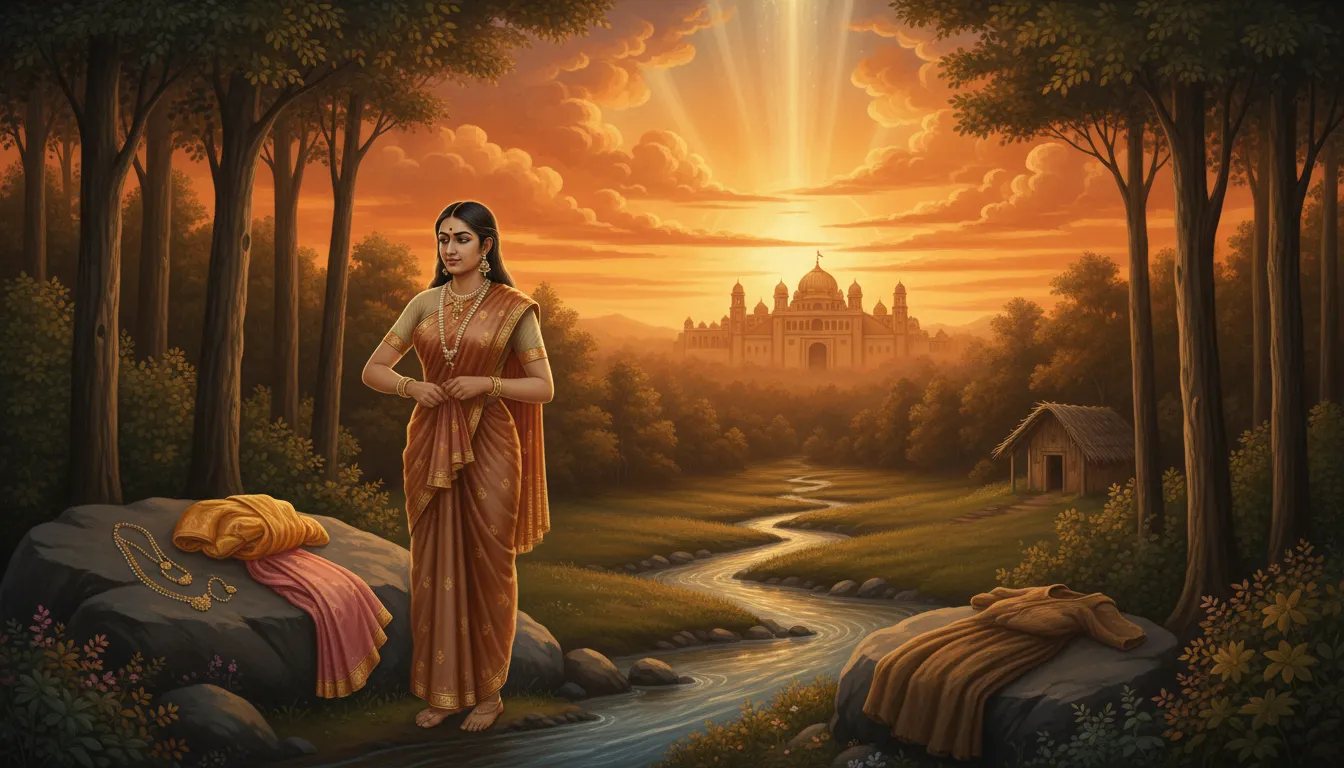
Abandoning silks for bark cloth, leaving behind maids and comforts, Lopamudra followed Agastya to his forest hermitage. She did not merely tolerate this transformation—she embraced it, performing religious duties with the same dedication she had brought to royal responsibilities.
This transition represents more than physical change. Lopamudra demonstrated that true nobility lies not in external circumstance but in internal orientation. A princess who could become an ascetic’s wife without resentment or diminishment possessed something beyond ordinary character.
The Request That Changed Everything
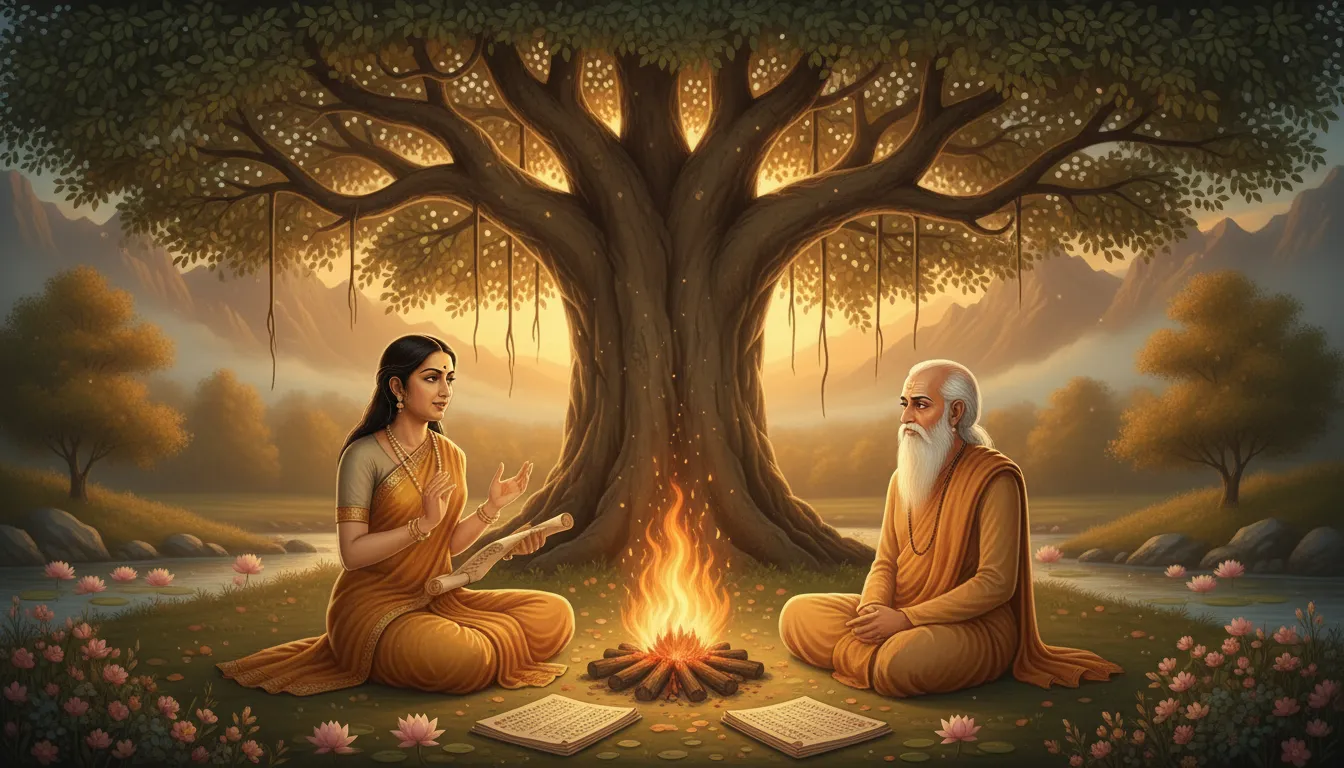
Yet Lopamudra was no passive figure. After some time of austere living, she approached Agastya with a request that would echo through sacred literature and spark legendary adventures.
She had fulfilled her duties faithfully. She had embraced poverty and hardship. But she would not conceive a child under conditions of deprivation. If Agastya wished for progeny, he must provide her with the dignity and comfort befitting both their stations.
“Through many autumns have I toiled and laboured, at night and morn, through age-inducing dawnings. Old age impairs the beauty of our bodies. Let husbands still come near unto their spouses.”
— Rigveda 1.179.1 (attributed to Lopamudra)
This was no complaint of a spoiled princess. Lopamudra articulated a profound philosophical position: spiritual advancement need not require material deprivation. Worldly life and spiritual life could coexist. The householder’s path (grihastha ashrama) possessed its own dignity and requirements.
The Quest for Wealth: Adventures of Agastya
Lopamudra’s challenge sparked one of the great adventure sequences in Indian mythology. Agastya, whose spiritual powers could move mountains and drink oceans, found himself on a quest for material wealth—surely one of literature’s great ironies.
The Three Kings
First, Agastya approached three wealthy kings—Srutarvan, Bradhnaswa, and Trasadasyu—each in turn. Following protocol, he announced his need and requested assistance. But each king, after careful accounting, discovered that their revenues exactly matched their expenditures for subjects’ welfare. They had no surplus to spare.
This episode teaches subtle lessons: even generous kings have limits; material wealth is not simply hoarded but flows through systems of responsibility; and the sage must look beyond obvious sources.
The Demon Kings Ilvala and Vatapi
On the kings’ advice, Agastya approached Ilvala, a wealthy demon king known for elaborate hospitality. But Ilvala harbored a terrible secret.
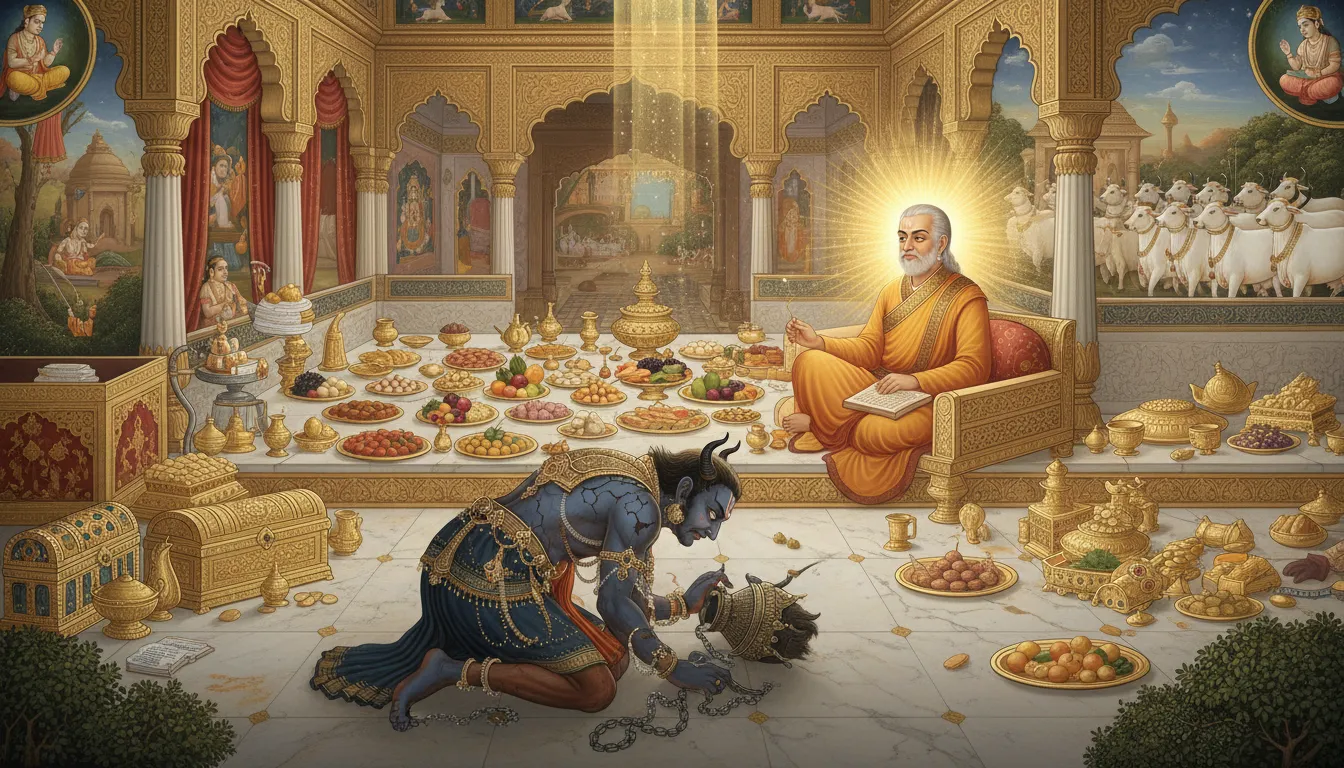
Ilvala had once requested that a Brahmin grant him a son equal to Indra. When refused, he developed a murderous scheme. His brother Vatapi could transform into any form. Ilvala would transform Vatapi into a goat, prepare an elaborate feast, and serve the meat to Brahmin guests. After the meal, Ilvala would call out “Vatapi, come forth!” and the demon would burst from the guest’s stomach, killing them. The brothers would then enjoy their victim’s possessions.
When Agastya arrived, Ilvala prepared his usual trap. The sage, forewarned by his powers, consumed the meal with full awareness. When Ilvala called for Vatapi, Agastya simply patted his stomach and declared: “Vatapi, you are digested.” The demon was destroyed.
The terrified Ilvala asked how he might serve the sage. Agastya requested wealth for himself and his three royal companions: ten thousand cows and as many gold pieces, plus a golden chariot. Ilvala complied, and Agastya returned to Lopamudra with the resources she had requested.
The Deeper Meaning
This adventure sequence operates on multiple levels. Literally, it explains how an ascetic acquired wealth. Symbolically, it demonstrates that spiritual power encompasses and exceeds material power. Philosophically, it validates Lopamudra’s position—the householder life has legitimate requirements that even great sages must acknowledge.
Rigveda 1.179: The Voice of Desire and Duty
Lopamudra’s most enduring contribution lies in the Rigveda itself. Hymn 1.179 of Mandala 1, dedicated to Rati (Love/Desire), presents a dialogue between husband and wife that explores the tension between asceticism and worldly engagement.
The Hymn’s Structure
The Vedic anukramani (indices) identify multiple voices in this hymn:
- Verses 1-2: Lopamudra speaks
- Verse 3: Agastya responds
- Verse 4: Resolution of dialogue
- Verses 5-6: A disciple’s commentary
Lopamudra’s Argument (Verses 1-2)
“Through many autumns have I toiled and laboured, at night and morn, through age-inducing dawnings. Old age impairs the beauty of our bodies. Let husbands still come near unto their spouses.”
Lopamudra speaks with remarkable directness. Her argument proceeds on multiple levels:
Practical: Time passes; bodies age; the window for conception closes.
Dharmic: Marriage creates obligations; a husband owes presence to his wife.
Philosophical: Even the ancient lawgivers (verse 2) who established eternal statutes did not complete their work—implying that rigid adherence to austere ideals represents incompleteness.
“For even the men aforetime, law-fulfillers, who with the Gods declared eternal statutes,— They have decided, but have not accomplished: so now let Wives come near unto their husbands.”
This second verse is remarkably bold. Lopamudra suggests that previous sages who emphasized asceticism over householder duty left something undone. She is not rejecting spirituality but expanding its definition to include fulfilled human relationship.
Agastya’s Response (Verse 3)
The sage’s response (preserved only in Latin in some translations due to its intimate content) acknowledges Lopamudra’s wisdom. He does not argue or override her but recognizes the validity of her position.
The Resolution
The hymn concludes with the statement that Agastya achieved his prayer’s fulfillment—both spiritual accomplishment and worldly progeny. The implied message: these goals need not conflict.
Scholarly Significance
Lopamudra stands among the 20-27 female rishikas credited with composing Rigvedic hymns. Her inclusion demonstrates that women participated in Vedic composition and transmission as seers in their own right, not merely as subjects of male composition.
The anukramani explicitly identifies her as a rishi (seer) for this sukta, using the term “mantra drashta” (discoverer/seer of mantras). This technical designation places her alongside male sages in the tradition of revealed wisdom.
The Sri Vidya Connection: Hadi Panchadasi
Beyond her Rigvedic contributions, Lopamudra plays a foundational role in Shakta traditions, particularly the Sri Vidya school of Goddess worship. Here her influence extends from ancient texts to living practice.
The Panchadasi Mantra
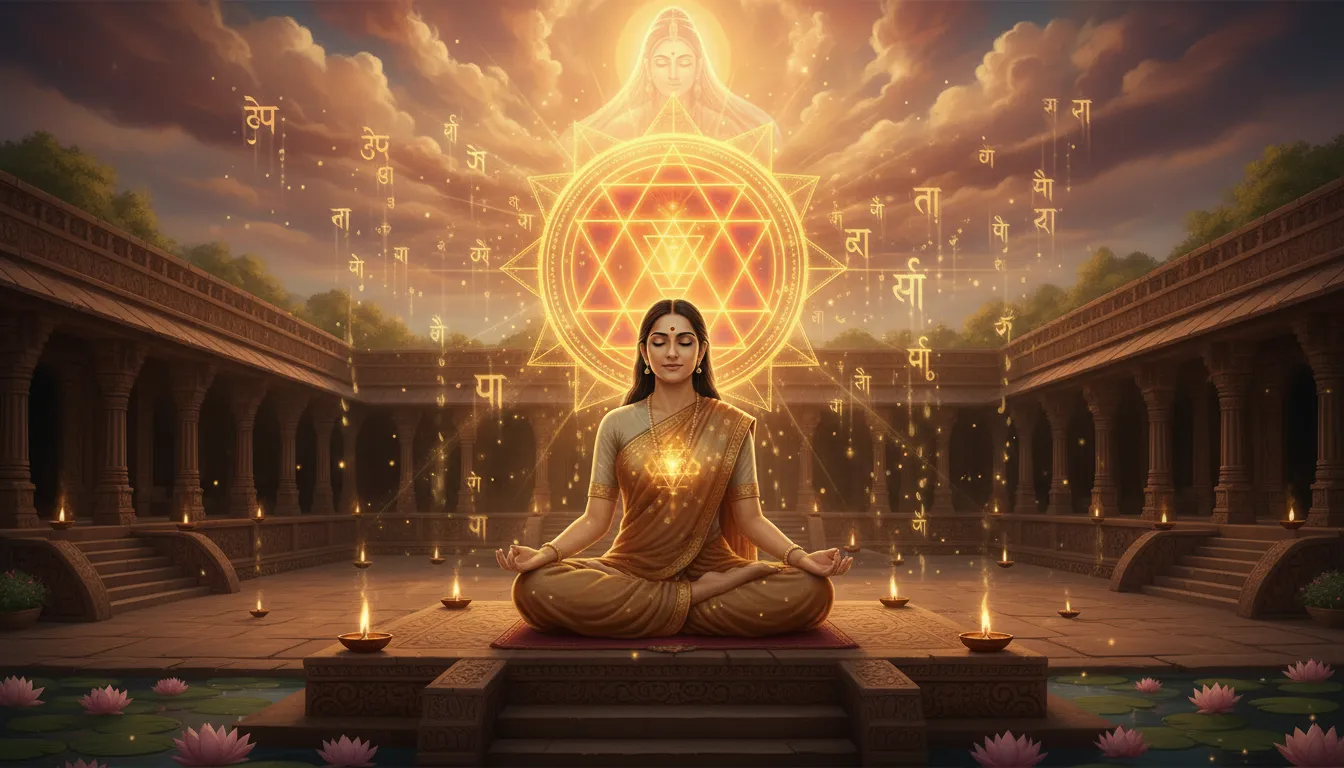
The Panchadasi (Fifteen-Syllabled) mantra is one of the most sacred formulations in Shakta Hinduism, devoted to Goddess Lalita Tripurasundari. This powerful mantra exists in two primary forms:
- Kadi Vidya — Beginning with the syllable “Ka,” taught by Manmatha (the love god)
- Hadi Vidya — Beginning with the syllable “Ha,” received by Lopamudra
The Hadi tradition traces directly to Lopamudra as its original seer. According to Shakta sources, the Divine Mother herself initiated Lopamudra into this mantra through direct transmission. Lopamudra’s unconditional devotion and incomparable spiritual attainment made her worthy of receiving this highest teaching.
Structure of the Mantra
The Panchadasi consists of three “kutas” (peaks or sections):
- Vagbhava Kuta (ka e i la hrim) — Representing knowledge and speech
- Kamaraja Kuta (ha sa ka ha la hrim) — Representing desire and creation
- Shakti Kuta (sa ka la hrim) — Representing action and fulfillment
In the Hadi variant attributed to Lopamudra, the arrangement of these syllables creates a distinct vibrational pattern, said to carry the specific spiritual power she attained.
The Lopamudra Mantra
Beyond the Panchadasi, tradition preserves a distinct “Lopamudra Mantra” within Sri Vidya. This version was popular in South India around the 6th century CE and maintains connections to Kashmir Shaivite traditions.
The Tripuropanishad serves as the primary textual source for this tradition, emphasizing meditation on the Goddess through the specific approach Lopamudra established.
Recognition in Lalita Sahasranama
The Lalita Sahasranama, the “Thousand Names of Goddess Lalita” found in the Brahmanda Purana, directly honors Lopamudra. One of the divine names is:
Lopamudrarchita — “She who is worshipped through the mantra named after Lopamudra”
This inclusion places Lopamudra’s name eternally within one of Hinduism’s most recited sacred texts. Every devotee who chants the Sahasranama invokes her contribution.
The Shakta Lineage
According to the Saubhagyasudhodaya, Lopamudra “received the Vidya from Mitranatha” and “initiates the Current of the Siddhas.” This places her within a specific guru-disciple lineage (parampara) that continues to influence Shakta practice.
Both Agastya and Lopamudra are considered ultimate devotees of Goddess Lalita. Lord Hayagriva, the horse-headed avatar of Vishnu who serves as a storehouse of knowledge, gave the initiation of Lalita Trishati (300 names of Lalita) to Agastya at Kanchipuram. Through Agastya and Lopamudra, this wisdom spread to the world.
Lopamudra as Kaveri: The River Goddess
In South Indian tradition, Lopamudra transforms from human sage to cosmic river, becoming the sacred Kaveri that sustains millions. This identification operates on multiple levels—literal, symbolic, and spiritual.
The Transformation Narrative
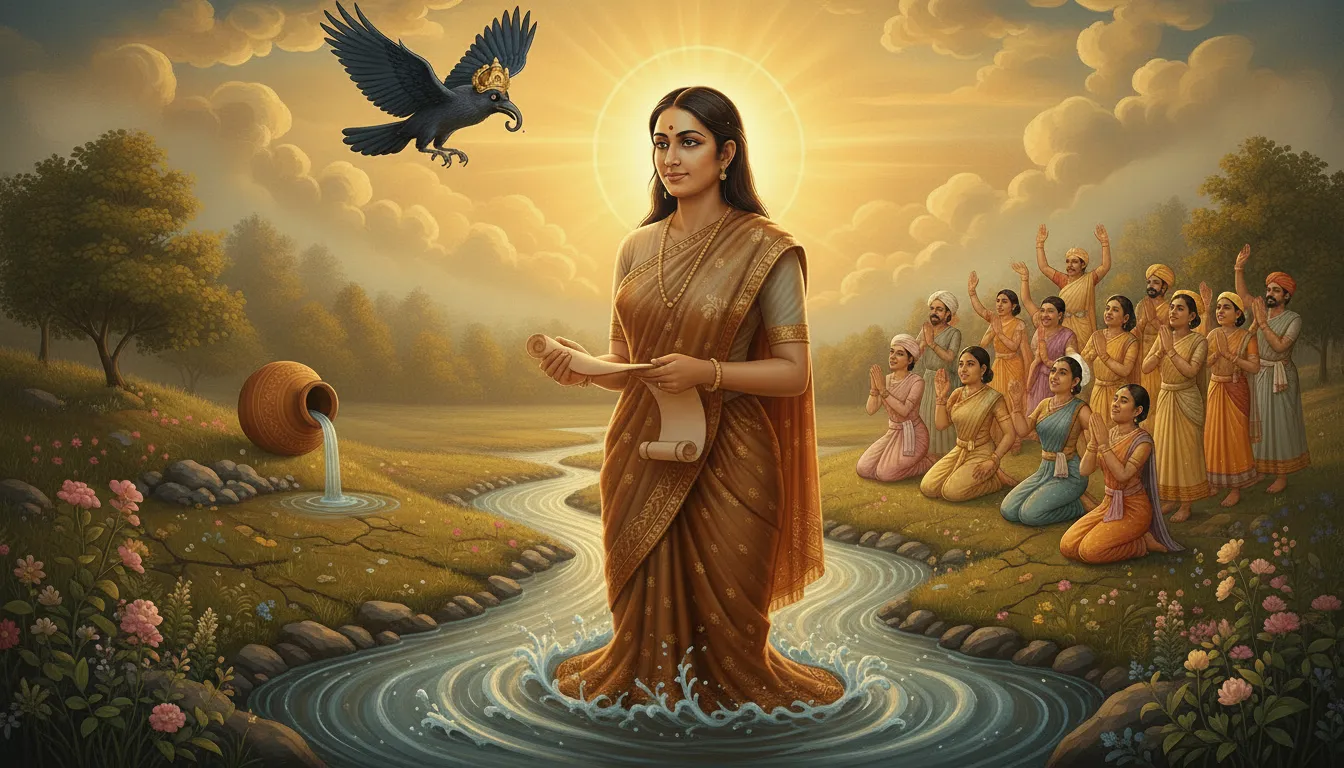
According to Skanda Purana and regional traditions, Lopamudra was an incarnation of Goddess Parvati. When severe drought afflicted South India, she assumed a liquid form to save the land.
In one version, she entered Agastya’s kamandalu (water pot). The sage was traveling south to balance the earth (which had tilted under the weight of crowds gathered for Shiva’s wedding in the north). When he set down his pot on the Brahmagiri hills, Lord Ganesha—taking the form of a crow—tipped it over. The water that spilled forth became the Kaveri River, flowing down to the drought-stricken lands.
Another tradition states that Lopamudra directly transformed herself into water out of compassion for suffering beings, choosing to nourish the land eternally rather than maintain individual existence.
The River’s Course
The Kaveri flows approximately 765 kilometers from her origin at Talakaveri in the Brahmagiri range of the Western Ghats (Kodagu, Karnataka) to her delta at the Bay of Bengal (Tamil Nadu). She passes through Karnataka for about 320 kilometers before entering Tamil Nadu for another 416 kilometers.
Along her course, she sustains one of India’s most fertile regions—the Kaveri Delta, often called the “Rice Bowl of Tamil Nadu.” The transformation of Lopamudra-into-river thus represents wisdom becoming sustenance, spiritual power manifesting as material abundance.
Religious Significance
Kaveri ranks among the seven sacred rivers of India. The Kaveri Sankramana festival in October draws thousands of devotees who perform rituals seeking prosperity, health, and spiritual purification.
At Srirangam, where the Kaveri splits to form the island hosting the great Ranganathaswamy Temple, the river receives particular veneration. Pilgrims believe that bathing in the Kaveri bestows the same merit as bathing in the Ganges.
The identification of this sacred geography with Lopamudra means that devotion to the river becomes devotion to the sage, and vice versa. Her wisdom literally flows through the landscape.
Dridhasyu: The Son of Legend
The union of Agastya and Lopamudra produced a remarkable child whose birth itself carried supernatural elements.
The Seven-Year Gestation
According to Mahabharata accounts, the child Dridhasyu (also called Idhmavaha) remained in Lopamudra’s womb for seven years. During this extraordinary gestation, he absorbed the Vedas directly from his parents’ discussions and recitations.
This detail serves multiple purposes in the narrative:
- It emphasizes the spiritual nature of the family—even the womb became a place of Vedic learning
- It connects to the theme of transmission—wisdom passes from generation to generation, literally from parent to child
- It demonstrates Lopamudra’s role as teacher, not merely vessel—the child learned from both parents
Birth and Destiny
When Dridhasyu finally emerged into the world, he did so reciting Vedic hymns. His very first breaths carried sacred sound. He would grow to become a poet himself, continuing the family tradition of verbal artistry in service of the divine.
His birth fulfilled the original purpose of Agastya’s quest—providing descendants who could perform ancestral rites and continue the lineage. The pitris who had hung suspended in uncertainty found their liberation through Dridhasyu’s existence and his dutiful performance of shraddha ceremonies.
The Complete Circle
Thus Lopamudra’s challenge to Agastya achieved its full fruition. Her insistence that householder life deserved proper support led to adventures that defeated demons, acquired wealth, and ultimately produced a son who embodied both traditions—spiritual attainment and worldly accomplishment.
Temples and Worship
While Lopamudra does not have a widespread temple tradition like major deities, specific sites preserve her memory and offer opportunities for veneration.
Sri Agathiyar Lopamudra Temple, Tirunelveli
Located near Papanasam and the Agasthiyar Falls in Tamil Nadu, this temple represents a rare site where both Agastya and Lopamudra receive worship together.
The temple’s modern history includes a significant renovation. In December 2011, Dr. K. Ravikumar learned that an original statue of Agastya had been lost in floods in 1992. Through spiritual guidance, new vigrahas (sacred images) of both Agastya and Lopamudra were installed with full prana pratishtha ceremonies on October 28, 2012.
The site connects to the broader Agasthiyar pilgrimage tradition. The waterfall area is believed to be where the divine couple once resided, and the surrounding forests still carry associations with their presence.
T. Nagar Chennai Temple
A temple in Raja Street, T. Nagar (Chennai) contains a separate sannidhi (shrine) for both Agastya and Lopamudra—considered very rare in temple architecture. The joint shrine acknowledges their spiritual partnership and joint contributions.
Talakaveri
At the source of the Kaveri River in Kodagu, Karnataka, the annual Kaveri Sankramana festival honors the river-goddess in her Lopamudra aspect. Pilgrims gather at the small tank marking the spring’s emergence, connecting to the mythological transformation narrative.
Informal Traditions
Beyond formal temples, Lopamudra receives acknowledgment in Sri Vidya practice wherever the Hadi Panchadasi is employed. Practitioners in this tradition implicitly honor her as the lineage source of their mantra.
Similarly, every recitation of the Lalita Sahasranama that includes “Lopamudrarchita” serves as an invocation of her name and contribution.
Lopamudra Among the Brahmavadinis
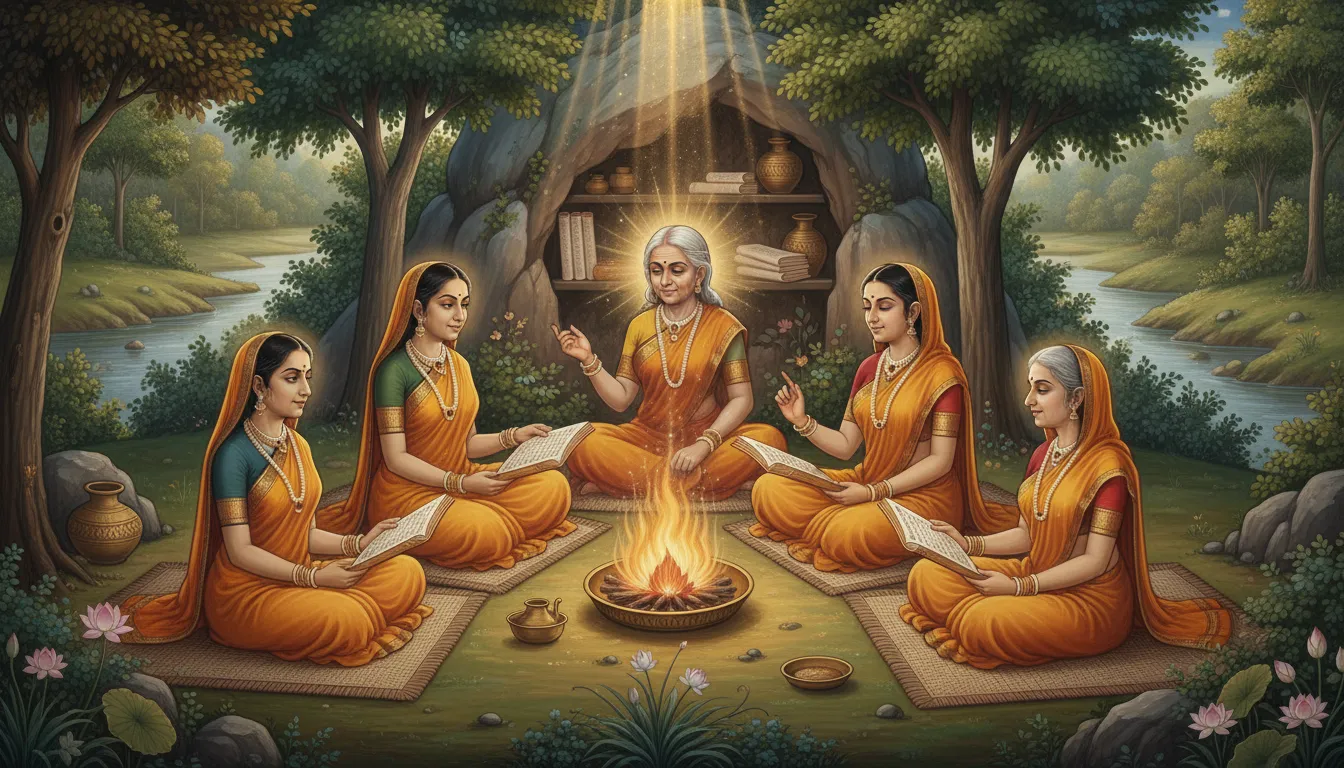
Lopamudra belongs to a distinguished group of Vedic-era women scholars known as Brahmavadinis—those who dedicated themselves to knowledge of Brahman, the ultimate reality.
The Brahmavadini Tradition
In Hindu philosophy, Brahmavadinis were women who pursued the highest philosophical knowledge rather than focusing exclusively on domestic duties (the path of Sadyovadhu). These women:
- Underwent upanayana (sacred thread ceremony) like their male counterparts
- Resided in gurukulas (teacher’s hermitages) for education
- Studied shruti texts (Vedic scriptures) through direct instruction
- Participated in philosophical debates
- In some cases, composed hymns that entered the Vedic corpus
This tradition demonstrates that Vedic society, at least in its early period, provided pathways for women’s intellectual and spiritual development at the highest levels.
Sister Sages
Lopamudra’s peers among the Rigvedic women composers include:
Ghosha — Afflicted with skin disease, she composed hymns (Mandala X, hymns 39-40) praising the Ashvins, the divine physicians who eventually healed her. Her poetry combines personal anguish with theological insight.
Vishvavara — A female seer whose hymn to Agni appears in the Rigveda. Her name means “all-beautiful” or “universally excellent.”
Apala — Composer of hymns to Indra dealing with healing and purification. Her story involves both physical affliction and spiritual triumph.
Gargi Vachaknavi — Though from a slightly later period (appearing in the Brihadaranyaka Upanishad), Gargi famously debated with Sage Yajnavalkya, pressing him on the nature of ultimate reality until he warned her to stop lest her head shatter.
Maitreyi — Another Upanishadic figure, she chose spiritual instruction over material inheritance from her husband Yajnavalkya, asking “What should I do with that which will not make me immortal?”
Lopamudra’s Distinction
Among these remarkable women, Lopamudra stands out for:
- The scope of her influence (Rigveda, Mahabharata, Puranas, Shakta traditions)
- The practical wisdom of her philosophy (integration of spiritual and worldly life)
- The continuing relevance of her mantra tradition
- Her transformation into sacred geography (the Kaveri)
She represents not merely historical curiosity but living tradition.
Philosophical Teachings
Though Lopamudra left no systematic treatise, her story and hymn articulate several profound insights:
The Integration of Paths
Lopamudra challenges the notion that spiritual life requires rejection of worldly engagement. Her position in Rigveda 1.179 suggests that previous teachers who emphasized pure renunciation “have decided, but have not accomplished”—they articulated ideals but did not achieve completeness.
True wisdom, in her view, encompasses both: spiritual aspiration AND human fulfillment; meditation AND relationship; transcendence AND embodiment.
The Dignity of Householder Life
By demanding proper resources for family life, Lopamudra validated the grihastha ashrama (householder stage) as a legitimate spiritual path, not merely a concession to weakness or desire.
This teaching proved influential. Later texts would elaborate the four ashramas (brahmacharya, grihastha, vanaprastha, sannyasa) as sequential stages of equal dignity, not hierarchies of spiritual attainment.
The Power of Articulation
Lopamudra achieved her aims not through force but through eloquent expression. Her hymn changed Agastya’s mind and behavior. Words, properly employed, carry transformative power.
This connects to her mantra tradition. The Hadi Panchadasi works precisely through sound—specific syllables arranged in specific patterns creating specific effects. Lopamudra’s own eloquence models what her mantras accomplish at subtler levels.
Partnership in Spiritual Life
The relationship between Agastya and Lopamudra presents a model of spiritual partnership. Neither dominates. Each brings distinctive gifts. Together they accomplish what neither could alone.
This model contrasts with narratives of solitary male sages. Lopamudra suggests that relationship itself can be a vehicle for awakening—that human connection, properly conducted, opens rather than closes spiritual doors.
Historical and Scholarly Perspectives
Dating the Rigvedic Period
Scholars generally place the composition of the Rigveda between 1500-1200 BCE, though some Indian traditions suggest earlier dates. Lopamudra, as a hymn composer in Mandala 1, would belong to this period.
The Mahabharata references, while claiming to describe the same figure, come from a text compiled over centuries (roughly 400 BCE to 400 CE). The Puranic materials are later still.
This temporal spread means that “Lopamudra” represents a figure continuously reimagined across millennia. Each tradition preserved and elaborated aspects meaningful to its context.
The Question of Historicity
Did Lopamudra exist as a historical individual? The question may miss the point. Whether or not a specific woman named Lopamudra lived circa 1500 BCE, the traditions bearing her name preserve:
- Authentic Vedic hymns attributed to a female seer
- Philosophical positions debated through subsequent centuries
- Mantra traditions practiced to the present day
- Geographic identifications (the Kaveri) affecting millions of lives
Her reality, in meaningful terms, lies in these continuing influences rather than in recoverable biography.
Women in Vedic Society
Lopamudra’s story contributes to ongoing debates about women’s status in ancient India. Her existence as a Rigvedic composer demonstrates that some women achieved recognition as spiritual authorities. Her story of accepting marriage while maintaining expectations shows negotiation within patriarchal structures.
Neither pure oppression nor pure equality describes her situation. She worked within constraints while expanding possibilities—a pattern recognizable across many historical contexts.
Legacy: Why Lopamudra Matters Today
For Spiritual Seekers
Lopamudra offers a model of integrated spirituality. In an age when many feel forced to choose between material success and spiritual depth, her teaching suggests a third option: conscious engagement with worldly life as itself a spiritual path.
Her mantra tradition provides practical tools for those drawn to Shakta practice. The Hadi Panchadasi remains a living tradition with qualified teachers and established protocols.
For Women
Lopamudra demonstrates historical precedent for women’s spiritual authority. She was not merely wife or mother but seer, composer, and tradition-founder in her own right.
Her story also shows the power of articulate advocacy. Rather than silent submission, she spoke her needs clearly and achieved her aims through persuasion.
For Scholars
The multiple traditions surrounding Lopamudra provide rich material for studying how sacred narratives develop across texts and centuries. The consistency of core themes amid varying details illuminates how Indian religious thought maintains identity while adapting to new contexts.
For Devotees
For those who see Lopamudra as a real spiritual presence, her name appears in daily Lalita Sahasranama recitation. Her river flows through the landscape. Her mantras vibrate through practitioners’ consciousness.
She lives not as memory but as continuing influence.
Conclusion: The Enduring Voice
In a hymn composed over three thousand years ago, a woman’s voice rises from the page, clear and compelling:
“Through many autumns have I toiled and laboured…”
She speaks of time and aging, of duty and desire, of what we owe to each other and to ourselves. Her words prompted one of India’s mightiest sages to reconsider his path and integrate what he had held apart.
That voice continues to speak. Through Shakta mantras, through the flowing Kaveri, through the enumeration of divine names, through every telling of her story—Lopamudra remains present. She was never simply Agastya’s wife, though she was certainly that. She was a seer who saw, a poet who spoke, a philosopher whose integrated vision remains relevant in every age that struggles to balance aspiration and embodiment.
Her name meant “the loss of distinctive marks.” Perhaps the deepest teaching lies there: that in surrendering our surface distinctions—princess or ascetic, ancient or modern, male or female—we discover what cannot be lost. The voice that spoke three millennia ago speaks still, because wisdom, once spoken truly, transcends its moment and its speaker.
References and Further Study
Primary Sources
- Rigveda, Mandala 1, Sukta 179
- Mahabharata, Aranyaka Parva (Forest Book)
- Brahmanda Purana, Lalitopakhyana
- Lalita Sahasranama
- Skanda Purana
- Shiva Purana
Academic Resources
- Jamison, Stephanie W. and Joel P. Brereton. The Rigveda: The Earliest Religious Poetry of India
- Flood, Gavin. An Introduction to Hinduism
- Kinsley, David. Hindu Goddesses
- Pintchman, Tracy. The Rise of the Goddess in the Hindu Tradition
Tradition-Specific Texts
- Tripuropanishad
- Saubhagyasudhodaya
- Various Shakta Tantra texts on Sri Vidya
This article is dedicated to preserving and sharing knowledge about the remarkable Vedic sage Lopamudra. It draws from traditional sources across multiple Hindu lineages and academic scholarship, aiming to present a comprehensive portrait of a figure whose influence spans millennia and traditions.
Quick Reference
| Attribute | Description |
|---|---|
| Sanskrit Name | Lopamudra (लोपामुद्रा) |
| Alternative Names | Kaveri, Kaushitaki, Varaprada |
| Period | Rigvedic Era (c. 1500–1200 BCE) |
| Status | Rishika (Female Seer), Brahmavadini |
| Spouse | Sage Agastya |
| Son | Dridhasyu (also called Idhmavaha) |
| Rigveda Hymn | Mandala 1, Sukta 179 (Hymn to Rati/Love) |
| Mantra Tradition | Hadi Panchadasi (Sri Vidya) |
| Associated River | Kaveri (South India) |
| Purana References | Mahabharata, Brahmanda Purana, Shiva Purana, Skanda Purana |
| Spiritual Lineage | Sri Vidya Shakta tradition |
| Temple | Sri Agathiyar Lopamudra Temple, Tirunelveli, Tamil Nadu |
Frequently Asked Questions
Who was Rishi Lopamudra?
Lopamudra was a Vedic Rishika (female seer) who lived during the Rigvedic period (c. 1500-1200 BCE). She was the wife of Sage Agastya and is recognized as one of the few women credited with composing hymns in the Rigveda, specifically the dialogue hymn 1.179. Beyond her Vedic contributions, she is the founder of the Hadi Vidya tradition within Sri Vidya Shakta practice and is honored in the Lalita Sahasranama as “Lopamudrarchita.”
What is the meaning of the name Lopamudra?
The name Lopamudra derives from two Sanskrit words: “Lopa” (loss/disappearance) and “Mudra” (seal/distinctive mark/beauty). According to legend, Sage Agastya created her by gathering the most beautiful traits from various creatures—the eyes of a deer, the grace of a panther, the fragrance of champak flowers—causing those beings to lose (lopa) their distinctive beauties (mudras). Thus her name means “She through whom distinctive beauties were lost.”
Is Lopamudra related to the Kaveri River?
Yes. In South Indian tradition, particularly as recorded in the Skanda Purana, Lopamudra is identified with the sacred Kaveri River. The legend states that she transformed herself into water to relieve a severe drought in South India. In one version, she entered Agastya’s water pot (kamandalu), and when Lord Ganesha (in crow form) tipped it over on the Brahmagiri hills, the water became the Kaveri River, flowing to nourish the land for eternity.
What hymn did Lopamudra compose in the Rigveda?
Lopamudra is credited with composing verses 1 and 2 of Rigveda Hymn 1.179, a dialogue hymn dedicated to Rati (Love/Desire). In these verses, she eloquently argues for the balance between spiritual austerity and marital duty, persuading her ascetic husband Agastya to fulfill his responsibilities as a householder. The Vedic anukramani (indices) explicitly lists her as a “mantra drashta” (seer of mantras) for this sukta.
What is the Hadi Panchadasi mantra associated with Lopamudra?
The Hadi Panchadasi is a fifteen-syllabled mantra in the Sri Vidya tradition devoted to Goddess Lalita Tripurasundari. Unlike the Kadi Vidya (which begins with “Ka” and was taught by Manmatha), the Hadi Vidya begins with “Ha” and was received by Lopamudra directly from the Divine Mother. This tradition was particularly prevalent in Kerala and relies on the Tripuropanishad as its primary text. Lopamudra’s mantra contribution is honored in the Lalita Sahasranama with the name “Lopamudrarchita.”